make preferable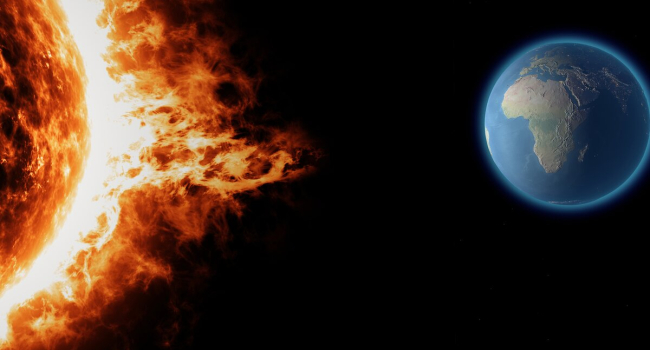
During the night of June 20, 2025, a powerful X1.9-class solar flare erupted on the Sun, making it the third most intense flare recorded this year. The Solar Astronomy Laboratory of the Space Research Institute of the Russian Academy of Sciences (IKI RAS) reported the event on its official website. The flare occurred at 2:50 a.m. Moscow time in Active Region 4114, which has been a hotspot of solar activity throughout June.
Classification and Comparison
According to international standards, the flare was rated X1.9, placing it among the most energetic flares of 2025. Only two events were stronger this year: the X2.7 flare on May 14 and the X2.0 flare on February 23. In total, there have been nine X-class flares since the start of the year — a clear sign of elevated solar activity in the current solar cycle.
Preceding Events
Just a day prior, during the night of June 18, another flare — X1.2-class — was recorded in the same Active Region 4114, peaking at 12:49 a.m. Moscow time. That event had been the most powerful of June until the X1.9 flare occurred. Earlier, on June 15, scientists noted a strong M8.4-class flare in the same region, accompanied by a plasma ejection that potentially could have triggered geomagnetic storms on Earth.
Impact on Earth
Researchers at IKI RAS emphasized that the X1.9 flare poses virtually no threat to Earth. Preliminary data suggest that the associated plasma ejection was directed toward the northern pole of the solar system, rather than toward our planet. This assessment is supported by space coronagraph data showing the plasma’s trajectory veering away from Earth. Nonetheless, specialists plan to conduct further analysis using advanced modeling to fully evaluate any possible consequences.
Context: Solar Activity
X-class solar flares are the most powerful type of solar events and are capable of disrupting radio communications, navigation systems, and satellite operations. In 2025, the Sun is nearing the peak of Solar Cycle 25, characterized by increased flare activity and geomagnetic disturbances. Forecasts indicate that solar activity will peak in summer 2025 and then gradually decline, though it will remain elevated through 2026.
Conclusion
The X1.9-class flare recorded on June 20, 2025, further confirms the high level of solar activity this year. While the threat to Earth is currently minimal, scientists continue to closely monitor Active Region 4114. Ongoing research will help improve our understanding of how such solar events impact our planet and space-based technologies — and enhance future solar activity forecasts.