make preferable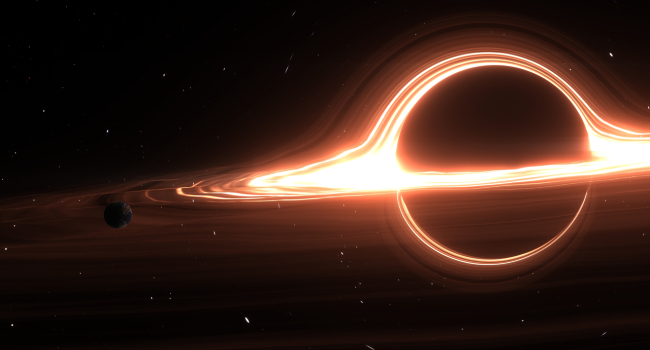
An international team of scientists has achieved a breakthrough in studying supermassive black holes, discovering that their ultrafast winds are not continuous streams but rather discrete gas ejections resembling “bursts of bullets.” The study, published in Nature, reshapes our understanding of how black holes interact with their host galaxies.
How Do “Gas Bullets” Work?
Using the Japanese-American XRISM mission, astronomers from the Japan Aerospace Exploration Agency (JAXA) and Durham University (UK) examined the winds emitted by supermassive black holes. They found that these winds consist of at least five distinct components, moving at speeds ranging from 20% to 30% of the speed of light (approximately 60,000–90,000 km/s).
“We expected these winds to be uniform streams, but the data revealed they are more like a series of gas clumps, as if fired from a cosmic weapon,” said Professor Kristina Done, the study’s lead author.
Powerful Impact on Galaxies
The new findings reveal that the energy of these gas ejections is 1,000 times greater than previously estimated. This immense energy not only slows the growth of black holes but also has a destructive effect on star formation processes in galaxies. The discovery underscores the critical role black holes play in galactic evolution by suppressing the birth of new stars.
Revising Old Models
Until now, scientists relied on simplified models of supermassive black hole interactions with their surroundings. However, XRISM’s results show that these models failed to account for the complex structure of the winds. The gas ejections, moving at varying speeds and energies, paint a more dynamic picture, necessitating new modeling approaches.
Significance of the XRISM Mission
The study’s success is largely due to the unique capabilities of the XRISM telescope, which captures high-energy X-ray emissions with unprecedented precision. This enabled astronomers to study the structure of black hole winds in detail for the first time and uncover their fragmented nature.
What Does This Mean for Science?
The discovery of “gas bullets” prompts scientists to rethink the mechanisms linking supermassive black holes and their galaxies. Understanding how these ejections affect star formation could shed light on galaxy evolution and development over billions of years. In the future, astronomers plan to continue observations with XRISM to gather more data on the behavior of these enigmatic cosmic objects.