make preferable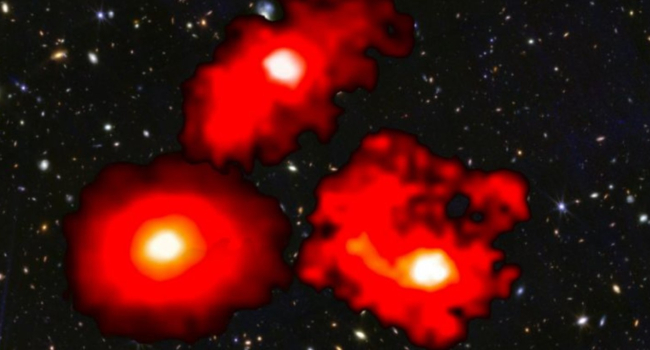
In the early universe, far away from us, astronomers have discovered huge galaxies that they call "red monsters." However, according to modern models, they simply could not have grown so quickly in such a short time, reports Livescience.com.
This discovery is difficult to explain for several reasons. In particular, it contradicts humanity's ideas about how galaxies formed when time and space were just emerging from the void.
"The question of incredibly massive galaxies immediately after the Big Bang has haunted astronomers since the first images from the James Webb Space Telescope appeared. It's like finding a 100-kilogram baby. Now Webb has proven that there really are "monsters" roaming the early universe," said astronomer Ivo Labe of Swinburne University of Technology.
Based on careful observations and analyses, humanity has a pretty good idea of how much cosmic activity is going on. But one crucial period remains unclear: the early universe, known as the “cosmic dawn,” the first billion years after the Big Bang.
Scientists have some idea of how quickly the universe formed from the primordial plasma that permeated the early universe, but obtaining observational data has been a bit more difficult. The advent of James Webb has made it possible to gather this evidence. As we move further out into deep space, the light from objects in it stretches out into the infrared wavelengths that Webb can see, making it the most powerful tool for studying cosmic dawn today.
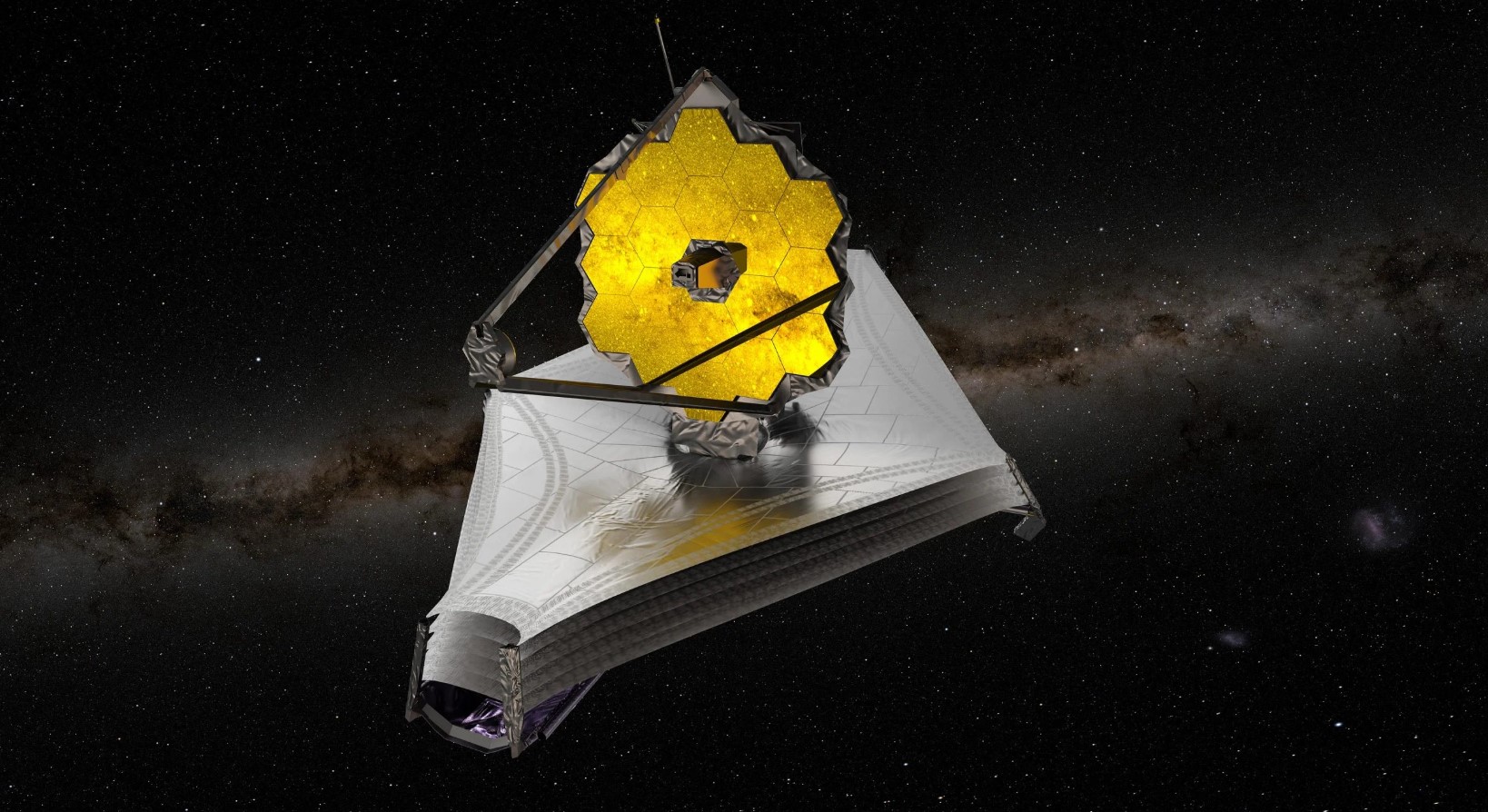
James Webb Space Telescope
According to current models, galaxies take a certain amount of time to gather material and grow. Scientists are not entirely sure about the details, but the most popular model involves clumps of dark matter that are gravitationally pulled into baryonic (or ordinary) matter is accumulating. As more and more baryonic matter accumulates, it begins to coalesce into stars that orbit the supermassive black hole at the galactic center.
Although galaxies appear quite rapidly after the Big Bang, their growth rate was thought to be too slow for massive galaxies to form at the dawn of the universe. So when James Webb turned his keen eye to the early universe and began to see signs of galaxies larger than expected, astronomers and cosmologists were puzzled.
One possible explanation, proposed earlier this year, is that these supermassive galaxies are not as big as they seem. It’s just that the light emitted by the matter around their central black holes is very bright, making the galaxies appear larger than they actually are. And a recent discovery has shown that black holes can briefly light up their galaxies, reaching very high luminosities.
This may be true for some galaxies. But new research led by astronomer Mengyuan Xiao of the University of Geneva shows that, at least in some cases, when a galaxy has the characteristics of a massive galaxy, it is actually a huge galaxy.
Each of these red monsters is almost as big as the Milky Way. None of this contradicts either the current model of the universe or the leading theory of dark matter, but they do show that galaxies are converting baryonic matter into stars two to three times faster than the most efficient star-forming galaxies in the later ages of the universe.
However, these galaxies challenge our understanding of the rate of star formation. If a galaxy is very active, it should have high levels of feedback—forces that push back star-forming material, limiting the rate at which new stars form.