make preferable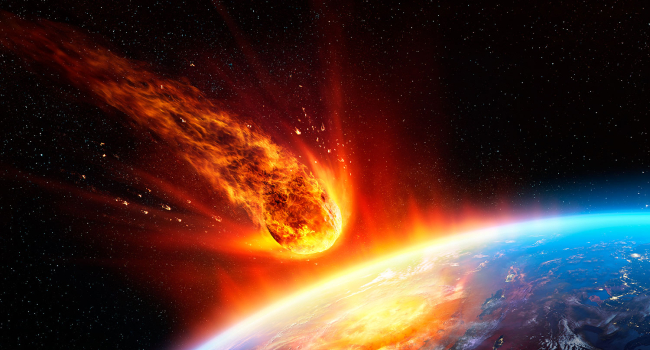
In the distant past, Earth was frequently struck by meteorites, leaving behind traces of destruction and transformation. One such meteorite was S2, which fell to Earth 3.26 billion years ago. It left behind geological evidence that can still be found today in the mountainous region of the Barberton Greenstone Belt in South Africa.
Geologist Nadja Drabon and her team conducted a thorough study of rock samples collected from this region, analyzing their sedimentology, geochemistry, and carbon isotope composition. Thanks to this, scientists were able to reconstruct what happened on the day when a meteorite, the size of four Mount Everests, struck the Earth.
"Imagine you're standing on the shores of Cape Cod in shallow waters with no strong currents. Then suddenly, a giant tsunami comes crashing in, splitting the seafloor," Drabon said in an interview.
The S2 meteorite triggered a tsunami that swept objects from land into coastal areas. The heat from the impact caused the top layer of the ocean to boil and also heated the atmosphere. A thick cloud of dust blanketed the region, halting photosynthetic activity.
However, bacteria proved resilient enough to recover quickly after the impact. Drabon’s team's analysis revealed that bacterial life rebounded rapidly, followed by sharp spikes in populations of single-celled organisms that fed on phosphorus and iron.
The iron was likely brought up from the ocean depths to shallow waters by the aforementioned tsunami, while phosphorus was delivered to Earth by the meteorite itself and through increased weathering and erosion on land.
Drabon's analysis shows that iron-metabolizing bacteria thrived right after the impact. This shift toward iron-preferring bacteria, though brief, is a key piece of the puzzle describing early life on Earth.
“We tend to think of meteorite impacts as destructive to life. But this study highlights that meteorites could have actually been beneficial to life, especially in its early stages… they may have even allowed life to thrive,” Drabon said.
The Barberton Greenstone Belt in South Africa, where Drabon focuses much of her current work, contains evidence of at least eight impact events, including S2. The team plans to further study the area to gain deeper insights into Earth’s history tied to meteorite impacts.