make preferable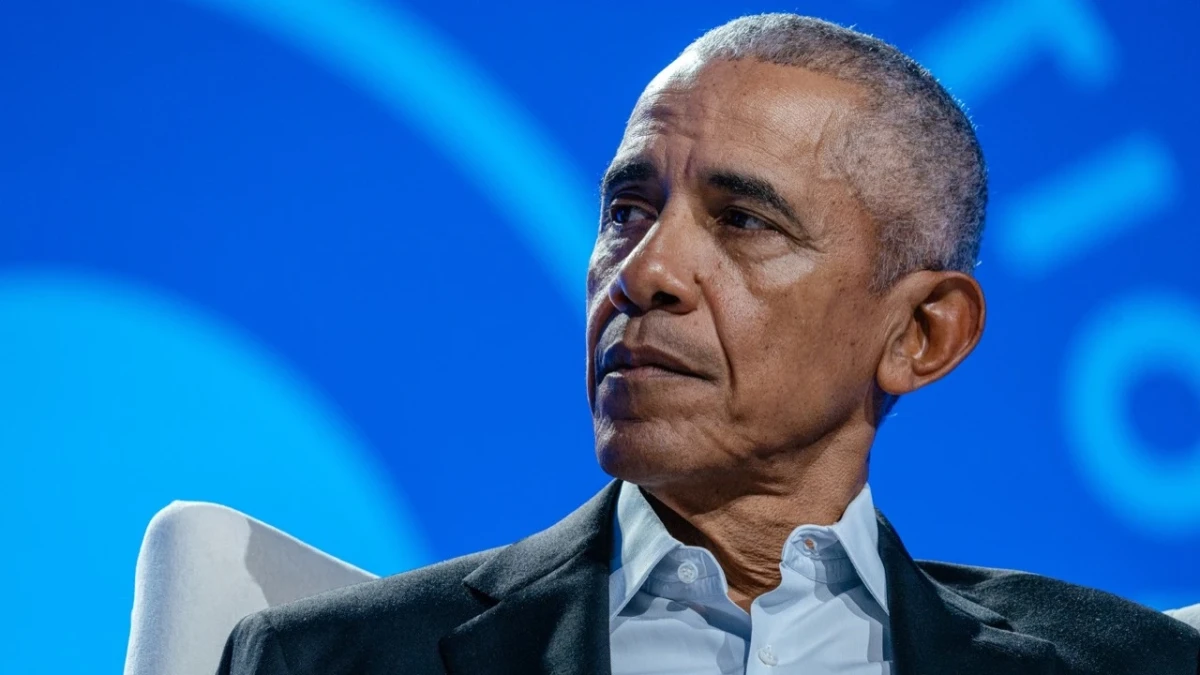
Former U.S. President Barack Obama urged the Democratic Party to begin an open public discussion on regulating artificial intelligence and to prepare a comprehensive plan — from possibly slowing the technology’s development in the interest of safety to protecting children and addressing job losses. His statement came amid a growing political conflict over AI, data centers, and whether America should slow the technology’s development to reduce risks.
According to The New York Times, Obama made this appeal at a closed fundraising event in Manhattan last week.
AI is developing too quickly — and in private hands
As The Guardian reports, addressing House Democratic leader Hakeem Jeffries, Obama said the party should prepare the groundwork for a “very public conversation” about artificial intelligence.
In his view, a broad range of issues must be discussed: the safety of the technology, the possible slowing of its development, AI’s impact on the labor market, and children’s well-being.
The main problem, as the former president sees it, is that AI is developing very quickly and is largely under the control of private companies. If the government and society cannot make sense of what is happening in time, the technology could become dangerous.
At the same time, Obama emphasized that artificial intelligence itself could bring significant benefits. In particular, it could accelerate drug development and help find solutions for the transition to clean energy.
Therefore, judging by his remarks, this is not about simply restricting the technology, but about trying to define the rules for its development before the consequences become irreversible.
Safety, children, and jobs
Obama proposed that Democrats formulate a clear public plan: how to ensure AI safety and how to protect children from its negative influence.
At the same time, he urged them to take into account the economic consequences of the technology’s spread, including possible domestic job losses.
This appeal came after several months during which the discussion of AI risks became especially acute. During that time, there were reports of out-of-control OpenAI chatbots, a hack affecting Hugging Face, residents of various American cities spoke out against the construction of data centers, and one AI researcher announced his resignation, warning that the creators of artificial intelligence themselves admit the possibility of catastrophic consequences by the end of the decade.
At the same time, industry representatives have also recently spoken about the need to slow the technological race. However, they must also consider investors’ interests: according to Goldman Sachs’ forecast, global investment in AI in 2026 could exceed $1 trillion.
Congress is barely regulating AI
Obama’s statement came at a time when the United States is approaching the midterm elections, while Congress has so far taken comparatively few concrete steps to regulate artificial intelligence.
Some influential Democrats and certain Republicans have advocated introducing rules for the industry. However, attempts to develop a unified approach remain limited.
Against this backdrop, Donald Trump’s administration is taking a different position. Earlier, Trump supported an initiative that would have prohibited states from regulating AI on their own, although that bill ultimately did not advance any further.
On Sunday, Trump told reporters that many concerns surrounding artificial intelligence are being raised by “very negative forces,” and that, in his view, the problems they predict will not happen. He said the main task is to preserve U.S. technological leadership.
Answering a question about whether AI development should be slowed or its regulation strengthened, Trump said that the U.S. is ahead of China and must preserve that advantage.
Data centers have become an unexpected campaign issue
One of the most visible points of political conflict around AI has become the data centers that power companies developing artificial intelligence.
As NPR notes, representatives of both parties have already begun speaking out against their construction in campaign advertising. Dissatisfaction with data centers has turned out to be one of the rare issues on which the positions of MAGA Republicans and liberal Democrats may align.
The reasons for this conflict go beyond abstract discussions about the future of technology. Residents of specific cities and regions are already facing the consequences of building AI infrastructure and are protesting against new facilities.
Trump, by contrast, continues to publicly defend data centers. Two weeks ago, he wrote on Truth Social that American communities opposing their construction risk becoming “backward and poor,” whereas, in his view, infrastructure development will bring jobs, lower taxes, and economic growth.
The AI issue is becoming political
Obama’s appeal shows that artificial intelligence is increasingly turning from a topic for technology companies into a full-fledged political issue.
Moreover, the dispute is no longer only about what rules should be set for chatbots or algorithms. Much broader questions are coming to the center of the discussion: who should control AI development, how quickly it should be deployed, how to protect children, what to do about the consequences for the labor market, and whether local communities are ready to accept the infrastructure needed for the technological race.
Against this backdrop, the positions of the two political camps are beginning to diverge more and more clearly. Obama proposes starting a public conversation about the risks and forming a comprehensive plan for governing the technology. Trump is betting primarily on speed of development and preserving American leadership in the competition with China.
It is precisely this conflict — between the drive to accelerate the technological race and the attempt to set boundaries for it — that could become one of the key political debates around artificial intelligence in the United States.