make preferable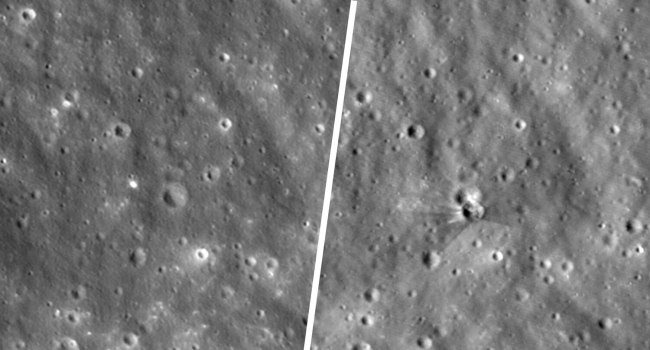
The American space agency has released images of the crater created by the impact of a spent Falcon 9 rocket stage from SpaceX. The strike left a pit about 18 metres wide on the lunar surface.
What the images show
Using images taken at different angles and under varying lighting conditions, scientists were able to examine the impact site in detail. The crater is approximately 18.3 metres wide, and its depth, based on shadow length, is less than three metres.
Bright and dark rays radiate from the crater. The dark streaks are weathered surface dust and rock, long exposed to solar wind, cosmic rays, and micrometeorites. This material was ejected from a depth of about half a metre. The brighter rays near the crater's edge consist of fresh soil excavated from deeper layers.
Where the stage came from
The object in question is the upper stage of a Falcon 9 rocket that, on 15 January 2025, sent the Blue Ghost‑1 lander from Firefly and the Resilience probe from ispace toward the Moon. After completing its mission, the stage remained in orbit. Influenced by lunar gravity, its trajectory gradually changed, and it eventually struck the surface at a speed of about 8,700 km/h.
The impact occurred in the vicinity of Einstein Crater on the far side of the Moon.
In brief
NASA has released images of an 18‑metre crater on the far side of the Moon, created by the impact of a Falcon 9 stage. The crater is less than three metres deep. Bright and dark rays—traces of ejected material—radiate from the impact site. The stage had sent the Blue Ghost and Resilience probes toward the Moon in January 2025 and later collided with the surface after its orbit changed.