make preferable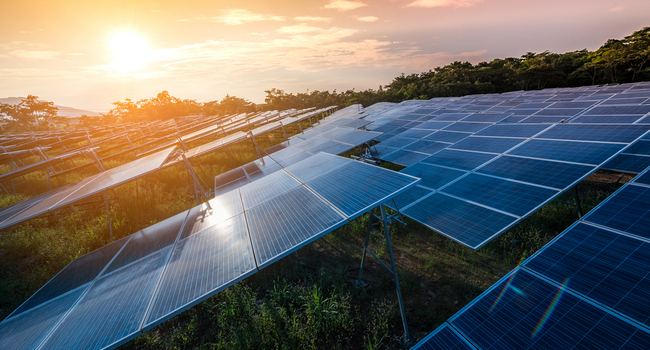
On Sunday, April 26, spot electricity prices across Europe collapsed to historic lows as a massive surge in solar generation collided with weak weekend demand and mild spring temperatures, serves as yet another reminder of the growing volatility in the continent's energy markets.
The Netherlands recorded the deepest negative value: following the day-ahead auction, the price stood at -€479.59 per megawatt-hour as of 2:00 PM CET. Belgium followed closely at -€479.27/MWh, while France reached -€478.80/MWh. During peak solar generation hours, most of continental Europe traded in ranges between -€400 and -€200 per MWh.
This slump surpassed the previous record set on Tuesday after Easter, April 7, when intraday prices in Germany dropped to -€323.96/MWh and in France to -€230.31/MWh, according to Bloomberg data.
A Structural Shift, Not an Anomaly
The record was predictable. Days earlier, The Brussels Times reported that Belgian wholesale electricity prices were expected to hit a year-to-date low on Saturday—projecting -€200/MWh amid excess solar generation and low weekend demand. However, Sunday’s results significantly exceeded those expectations.
The event fits into a broader trend that has accelerated sharply in 2026. According to the consulting firm Montel, Europe produced a record 384.9 terawatt-hours of electricity from renewable sources in the first quarter, with solar output reaching an all-time high for the period.
In Germany alone, wind energy production rose by 27% year-on-year during the first three months of the year. According to Bloomberg, the number of hours with negative prices in Spain more than tripled compared to the same period last year, while in France, it nearly doubled.
Negative prices occur when electricity supply significantly exceeds demand, forcing producers to pay to offload excess power into the grid. Once a rare phenomenon, this has become a structural feature of European power systems: according to the International Energy Agency, the share of hours with negative prices in 2025 accounted for approximately 6% of the total in both Germany and Spain.
A Market of Contradictions
These extreme lows coexist uneasily with an energy crisis that has kept average European electricity prices high since the US and Israel launched airstrikes against Iran on February 28. By mid-March, Dutch TTF gas futures nearly doubled, exceeding €60/MWh, as the conflict disrupted energy supplies from the Persian Gulf and rattled markets already strained by low gas storage levels. Although gas prices have since retreated—dropping to approximately €44/MWh by late April—they remain roughly 40% higher than last year’s values.
The European Commission responded with plans to reduce electricity taxes and coordinate the filling of gas storage facilities, while average weekly wholesale prices in most major European markets remained above €95/MWh in mid-April.
This divergence exposes a key contradiction of the European energy transition: on any sunny weekend, renewable energy can devalue electricity to nearly zero, yet the market as a whole remains plagued by dependence on fossil fuels and geopolitical risks. As Norbert Allnoch, director of the IWR, put it: "The more actively renewable energy displaces expensive gas-fired power plants, the lower the calculated price becomes. Conversely, if the share of expensive power plants rises, exchange prices—and ultimately prices for consumers—rise as well."