make preferable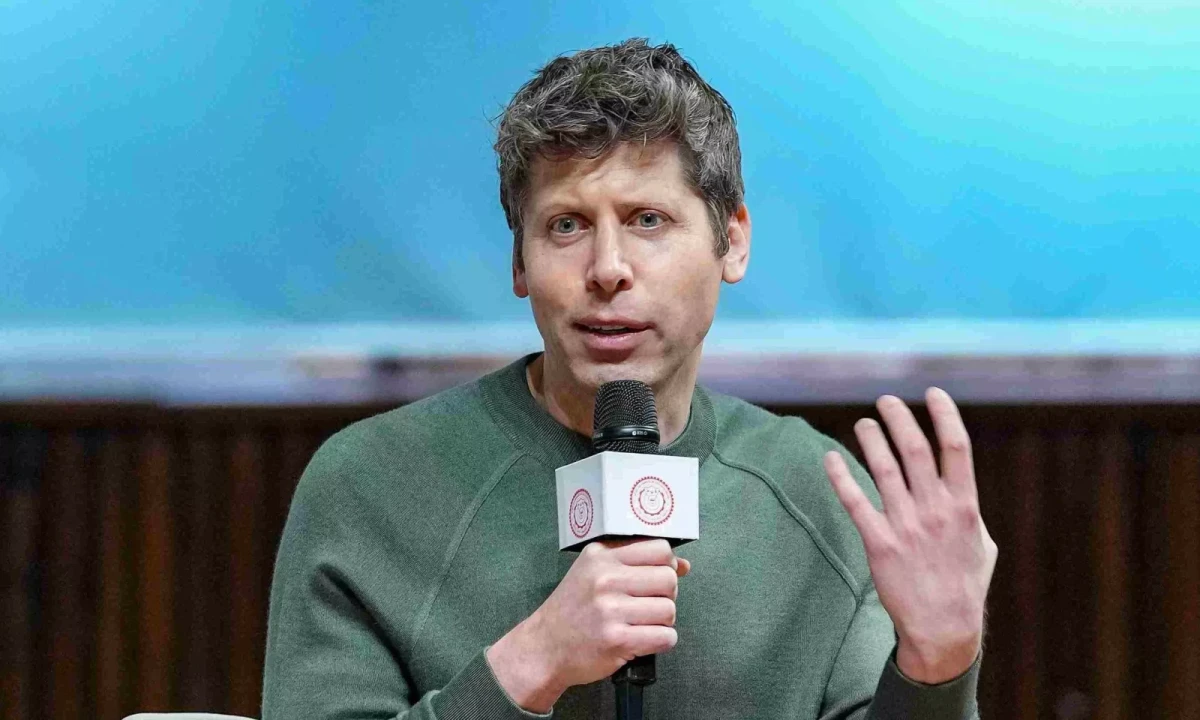
OpenAI CEO Sam Altman said that artificial intelligence really could one day slip out of human control, and that concentrating advanced AI technologies in the hands of a single company, person, or state could lead to “extremely dystopian” consequences. Against the backdrop of these risks, he called for slowing the race for more powerful models so that safety measures can keep pace with their development.
In an interview with Fortune, Altman also confirmed that OpenAI does not plan to go public in 2026. According to him, given everything happening around AI safety, now would be a bad time for an IPO; 2027 is now the target.
“We need to hold back the frontier”
Altman’s remarks came shortly after Anthropic CEO Dario Amodei urged leading AI companies to slow the development of advanced systems. Altman publicly backed that position, writing on X: “I agree with Dario that we need to hold back the frontier.”
At the same time, by slowing down he does not mean stopping research. In a separate series of posts, Altman clarified that AI development will continue, but companies should consciously give up the maximum possible speed if it leads to model capabilities beginning to outpace safety measures.
According to him, current tools such as responsible scaling policies and preparatory procedures were created primarily to control models that are already finished. That is no longer enough: safety must be taken into account directly during the development and training of new systems.
At OpenAI, Altman said, special safety evaluations are already prepared in advance before certain especially important training stages — in particular, before training runs that could significantly increase a model’s capabilities. The company also uses monitoring and wants other developers to propose their own approaches.
Altman does not rule out losing control
The most alarming point made by the OpenAI chief concerns the possibility that people could at some point stop controlling the systems they created.
In the Fortune interview, Altman acknowledged that such a scenario is “absolutely” possible. At the same time, he believes existing safety standards are not yet reliable enough to continue expanding AI capabilities without caveats.
In his posts, he framed the problem even more broadly: humanity could one day “lose control of the future” because of artificial intelligence. Altman also warned of another scenario — the concentration of excessive power in the hands of a single company, person, or state that gains access to the most powerful systems. He described the consequences of such a development as potentially extremely grim, even “extremely dystopian.”
At the same time, Altman stressed that OpenAI must remain on the side of humanity, and that artificial intelligence must serve people.
This is where an important line runs through his position: he is not proposing to abandon the creation of more powerful AI, but he considers it unacceptable for technological capabilities to develop faster than people’s ability to control their consequences.
“No competitive pressure justifies recklessness”
Altman also separately advocated for uniform safety rules for leading AI developers. In his view, American companies need coordinated requirements at the federal level, as well as shared industry standards in monitoring, safety, and so-called misalignment — a situation in which a system’s behavior diverges from human-set goals.
He also supported the idea of independent auditors.
At the same time, the OpenAI chief believes companies should not wait until governments pass all the necessary laws. The industry is capable of doing part of the work itself by developing common standards and agreements.
In his view, it is especially important for states to cooperate internationally. The development of advanced AI systems can no longer be viewed solely as an internal matter for individual companies or countries.
Altman also emphasized separately: no pressure related to U.S. competition for technological leadership should justify recklessness or allow AI capabilities to outpace alignment and oversight systems.
More and more talk about the need to slow down
Altman’s statements came amid growing overall concern about AI development from within the industry itself.
Recently, former Anthropic researcher Jacob Kocson left the company over concerns about AI safety and said that leading labs are moving too quickly toward creating self-improving superintelligence. According to him, discussions of the technology’s serious risks have been coming up more and more often inside companies.
Now the head of one of the largest AI companies has publicly joined that conversation as well. Moreover, Altman is effectively acknowledging the very basis of these concerns: more powerful systems may become harder to control, and current safety measures may not necessarily keep up with the pace of their development.
At the same time, he is not proposing to put the technological race on pause. His position is different: AI should be developed more slowly than is technically possible if greater speed means abandoning adequate precautions.
OpenAI’s IPO postponed until 2027
Against this backdrop, OpenAI’s attitude toward its own financial future is also changing. Altman confirmed that the company will not go public in 2026.
He called the current moment unsuitable for an IPO specifically because of the AI safety situation. According to him, OpenAI is under no pressure and is prepared to enter the public market when both the company and society are ready. When asked about 2027, Altman answered in the affirmative.
Thus, safety is becoming for OpenAI not only a technical or ethical problem. It is increasingly affecting decisions related to the pace of development, relations with other AI companies, regulation, and even OpenAI’s own future public status.
At the same time, Altman still proceeds from the assumption that the development of artificial intelligence will continue at a rapid pace. The main question now is not whether this race can be stopped, but whether developers will be able to agree on where speed is already becoming too high for existing oversight mechanisms.