make preferable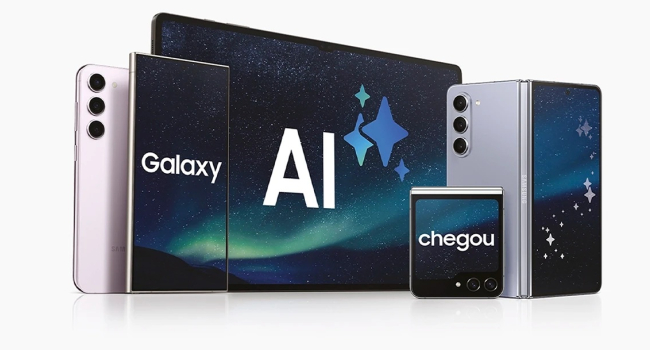
Samsung is changing the philosophy behind its flagship smartphone development. The company will no longer chase maximum specification numbers just for the sake of bigger figures — priority will instead be given to how effectively hardware and software work with the Galaxy AI ecosystem. This was stated directly by TM Roh, president of Samsung’s mobile division, in an interview with GadgetMatch.
Why Samsung is abandoning the old approach
According to the executive, the key factor in upgrading hardware platforms is no longer increases in megapixels, gigahertz, or gigabytes, but rather a device’s ability to fully support the Galaxy AI ecosystem. The company now develops processors, memory, cameras, displays, and AI features as a unified system. Updates in the Galaxy S or Galaxy Fold lineups occur only when all components reach the necessary level of integration and performance.
“We create hardware, software solutions, and artificial intelligence functions as a single system,” Roh emphasized.
This explains why recent generations of Samsung flagships have not always shown dramatic leaps in “on-paper” specifications: instead, the company focuses on deep optimization for AI tasks.
What exactly is changing in the hardware
Processors
Processors now receive significantly expanded neural processing units (NPUs) specifically designed to accelerate AI tasks — from image and video generation to real-time translation and photo processing.
Security and privacy
Samsung is introducing specialized hardware modules for on-device AI processing, allowing more data to be handled locally and reducing the need to send information to the cloud.
Cameras
Physical improvements such as sensors and optics remain important, but most progress now comes from algorithms. Modern photography on Samsung smartphones relies heavily on AI processing: night mode, portraits, object removal, and video enhancement now operate at a level that previously required much larger sensors.
TM Roh directly addressed the lack of major physical camera upgrades in recent generations:
“Modern photography largely depends on image processing algorithms based on artificial intelligence technologies that are tightly integrated with the device’s hardware.”
What this means for users and the market
Samsung is effectively acknowledging that in 2026, the average user no longer notices the difference between 108 MP and 200 MP, or 120 Hz and 144 Hz displays in everyday use. What users do notice is how quickly and accurately a phone can remove noise in night photos, translate speech in real time, generate wallpapers, or edit videos with a single tap.
This represents a strategic shift: instead of competing over who has the biggest numbers, Samsung is betting on the Galaxy AI ecosystem, aiming to make it as recognizable and valuable as Apple’s iOS ecosystem or Google Pixel’s AI-driven features.
In the coming years, we can expect flagship devices where the main upgrades won’t be visible on the spec sheet, but rather in how much smarter and more convenient the phone becomes thanks to AI.
In brief
Samsung is officially abandoning the traditional “specs race” in favor of developing Galaxy AI. Mobile division president TM Roh stated that hardware is now designed as a unified system optimized for AI tasks. Processors receive powerful NPUs, cameras improve mainly through algorithms, and updates are released only when the entire ecosystem reaches the required level. Physical specifications are no longer the main priority — what matters most is how effectively the device works with artificial intelligence.