make preferable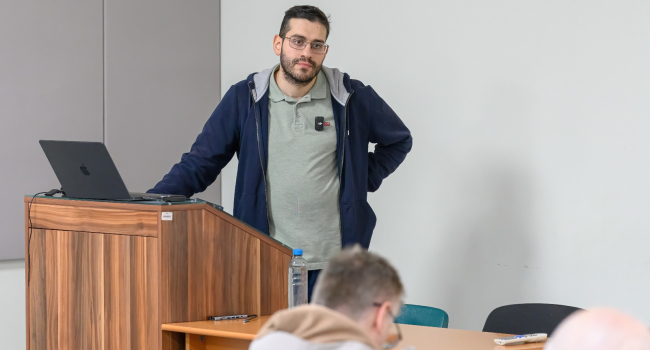
On November 26, 2025, PyData Yerevan hosted the last meetup of the year 2025 at the American University of Armenia’s Akian College of Science and Engineering, featuring Senior Software Engineer Erik Davtyan. As part of the global PyData ecosystem, an initiative of NumFOCUS supporting open-source scientific computing, the Yerevan chapter continues to deepen Armenia’s connection to international data science and engineering communities by organizing monthly meetups. This event highlighted the growing demand for expert-level discussion on improving the performance of applied AI systems.
PyData events are known for bringing together contributors and power users of open-source libraries such as NumPy, pandas, Jupyter, scikit-learn, and PyTorch. Regional conferences and meetups featuring leading experts serve as platforms for exchanging technical insights, practical frameworks, and emerging methodologies in data management, analytics, machine learning engineering, and AI-driven application development. Being invited to speak at a PyData event reflects not only subject-matter expertise but also meaningful contribution to the open-source data engineering ecosystems.
Erik Davtyan, currently a software engineer at Not Diamond, a San Francisco startup pioneering intelligent LLM routing and automated prompt optimization, delivered the meetup’s featured technical talk. With the title of his talk, “Engineering Better Prompts Using Data Science,” he emphasized that prompt optimization is the key to improving the performance of AI systems, making them more efficient and reliable.
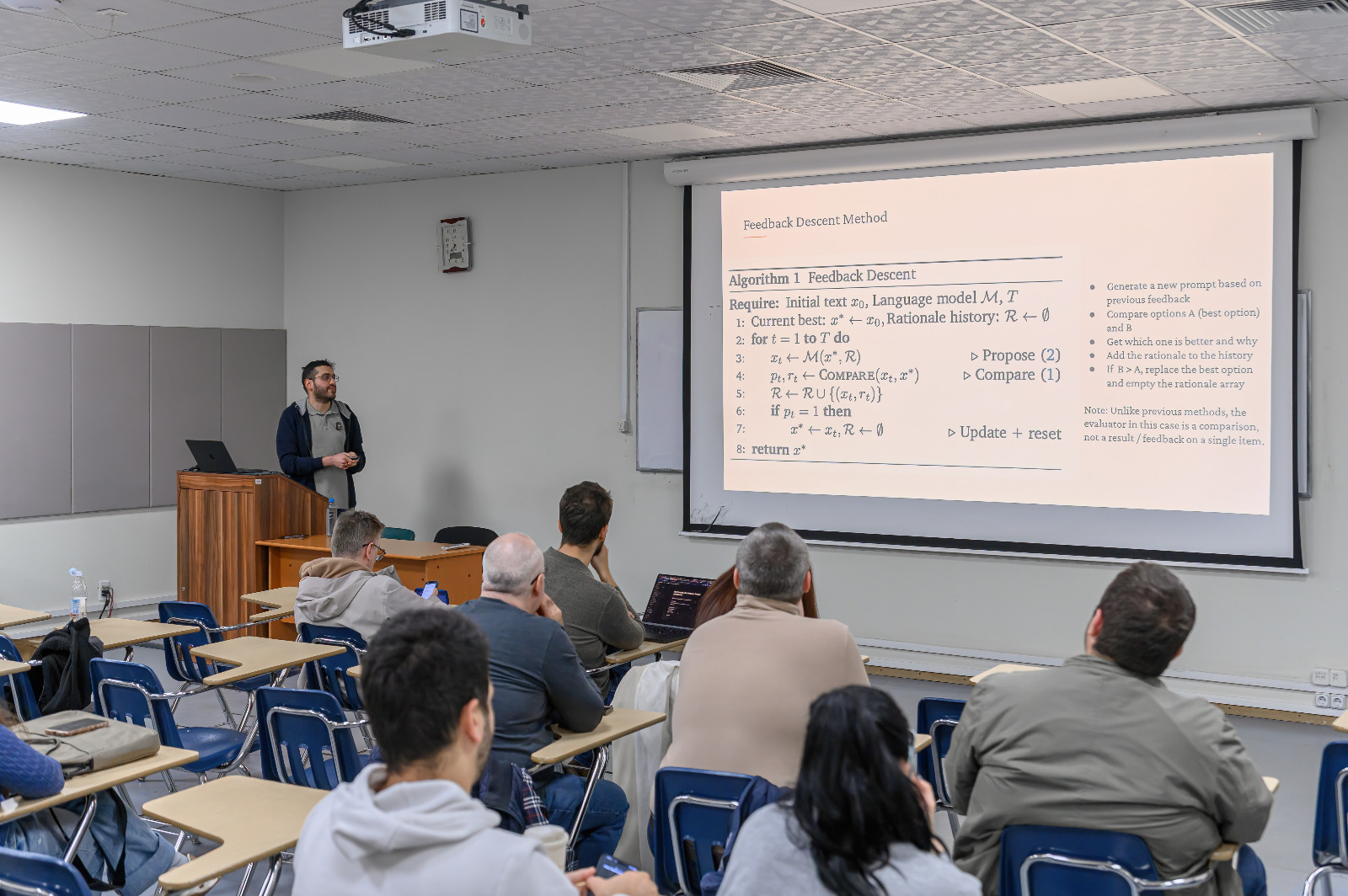
Prompt optimization is the process of refining prompts to improve the quality and consistency of AI-generated responses. In his talk, Davtyan outlined four modern approaches—MIPRO, TextGrad, GEPA, and Feedback Descent—that apply established machine-learning principles to optimize prompts rather than retraining models. These methods evaluate prompt performance using existing datasets—such as a company’s internal customer-support data—by providing the system with input questions, generating AI responses, and comparing those outputs to the corresponding reference answers. The resulting performance signals are then used by optimization algorithms to iteratively refine the prompt over multiple iterations. These techniques result in AI systems that are more consistent, efficient, and adaptable to specific tasks and domains.
Davtyan was invited to talk about prompt optimization as the featured speaker of this month’s meetup as he possesses both deep familiarity with leading research in large language models and hands-on experience building, evaluating, and deploying production-grade prompt optimization products at Not Diamond. According to PyData Yerevan’s speaker spotlight for the event, “few people in our local [Armenian tech] community approach prompt engineering with this level of clarity and data-driven thinking.” Davtyan’s presentation illustrated where some of the latest AI developments currently stand and where they are headed. During the presentation, Davtyan demonstrated that manual prompt engineering is increasingly insufficient for supporting business-critical AI solutions.
The talk was followed by a technical Q&A session about time investment and data quality needs to implement these approaches in production. Davtyan described a broader shift toward automated prompt engineering, noting its potential to reduce engineering time, cost, and improve system performance. He argued that in this emerging era of prompt optimization, a company’s competitiveness will increasingly depend on two factors: its ability to adopt and implement the latest engineering techniques, and the quality of the data it can procure, curate, and leverage.
The recording of Davtyan’s talk is posted on the official PyData YouTube channel (@PyDataTV), making it accessible to the broader community of 170,000 subscribers.
Lilith Vardanyan