make preferable
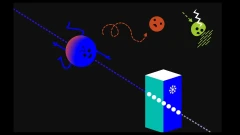
Ancient stars entering the red giant phase are capable of engulfing giant planets that orbit too close to them, according to astronomers from the University of California, Los Angeles, and the University of Warwick. An analysis of nearly half a million stars showed that the older and larger a star becomes, the less likely it is to have massive planets nearby. This finding supports the theory of tidal disruption, where gravitational forces pull planets inward, slowing their orbits and causing them to spiral into the star. The results were published in the Monthly Notices of the Royal Astronomical Society (MNRAS).
The Red Giant Phase: When a Star “Devours” Its Planets
When a Sun-like star exhausts the hydrogen in its core, it expands and cools, transforming into a red giant. Its radius increases hundreds of times, engulfing nearby planets. Researchers examined 456,941 stars at the early stage of this phase using data from NASA’s Transiting Exoplanet Survey Satellite (TESS). They identified 130 planets and planetary candidates, including 33 new ones, with orbital periods shorter than 12 days.
The analysis revealed that the likelihood of finding giant planets like Jupiter decreases as the star expands. For red giants, the probability is just 0.11%, three times lower than for main-sequence stars. Lead author Edward Bryant from the University of Warwick and UCL explained that this provides strong evidence that stellar evolution causes planets to spiral inward and be destroyed.
Tidal Interaction: The Mechanism of Destruction
The cause lies in tidal forces—the gravitational pull between a star and a planet, similar to the Moon’s effect on Earth’s oceans. As the star expands, the tidal influence intensifies, slowing the planet’s orbit. The planet gradually spirals inward until it enters the stellar atmosphere or disintegrates. Bryant noted that, unlike the stable tides on Earth, these forces are fatal: the planet loses angular momentum and eventually falls into the star.
Modeling confirms that for planets orbiting closer than 0.1 AU (astronomical units), destruction is inevitable within 10 to 100 million years. This explains the observed scarcity of giant planets around aging stars.
The Future of the Solar System: Earth May Survive, But Not Life
In about 5 billion years, the Sun will become a red giant, expanding to roughly Earth’s current orbit. Scientists predict that Mercury and Venus will be engulfed, while Earth may narrowly escape as the Sun’s weakened gravity allows it to shift outward. However, Earth’s surface will be scorched, and its oceans will evaporate, making life impossible. The authors concluded that while Earth might avoid being swallowed, life on it would almost certainly perish. Jupiter and Saturn, being farther away, are expected to survive, though their orbits could change.
The Significance for Astronomy
This discovery fills a gap in the understanding of planetary system evolution, explaining why older stars rarely have nearby giant planets. Future missions such as PLATO and ARIEL will refine measurements of planetary masses to improve modeling. The same mechanism likely applies to exoplanets—about 30% of systems with red giants lose their planets this way.
Bryant added that studying planetary masses will help determine why some worlds endure stellar evolution while others do not.
In Brief…
Ancient red giant stars destroy nearby giant planets through tidal interactions: gravity slows their orbits, causing a spiral fall into the star. Analysis of 500,000 TESS-observed stars showed that the probability of hosting such planets is three times lower for red giants. In about 5 billion years, the Sun will engulf Mercury and Venus; Earth may survive, but life will not. The discovery explains the shortage of giant planets around old stars.