make preferable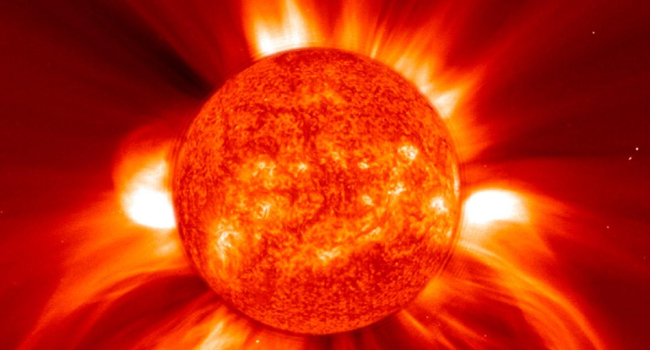
Astronomers, using the world’s most powerful solar telescope, have for the first time directly observed small-scale twisted magnetic waves—known as torsional Alfvén waves—in the Sun’s corona. This discovery may finally explain why the solar atmosphere is millions of times hotter than the star’s surface. The results, obtained with the Daniel K. Inouye Solar Telescope in Hawaii, were published on October 24, 2025, in Nature Astronomy.
Alfvén Waves: From a 1942 Theory to Direct Observation
Alfvén waves—magnetic disturbances propagating through plasma—were predicted in 1942 by Nobel laureate Hannes Alfvén. Large-scale versions of these waves have been seen during solar flares, but smaller, ever-present twisted waves had remained elusive—until now.
“This discovery completes a search that began in the 1940s,” said Richard Morton, lead researcher and professor at Northumbria University, UK. His team used data from the 4-meter Inouye Telescope, which provides the highest-resolution images of the Sun ever taken. In October 2023, during test observations, the scientists tracked iron heated to 1.6 million °C and noticed subtle red and blue shifts along the edges of magnetic loops—clear signatures of twisting motion.
How the Invisible Twist Was Detected
Plasma motion in the corona is dominated by oscillations that mask torsional waves. Morton developed a method to filter out these “swaying” motions and isolate the twisting. Spectroscopic data revealed redshifts where gas was moving away and blueshifts where it was approaching—a Doppler effect pattern revealing helical rotation.
These waves twist magnetic field lines like a corkscrew, transferring energy upward. Even in quiet solar regions, the corona is filled with such waves—constantly stirring and energizing the upper atmosphere.
Why the Corona Is Hotter Than the Surface
The Sun’s surface temperature is about 5,500 °C, yet its corona reaches millions of degrees. For decades, Alfvén waves were suspected of playing a key role in this paradox. They carry energy from the photosphere into the corona, where it dissipates as heat.
The new data confirm magnetic turbulence models suggesting that Alfvén waves act as an energy conveyor belt, powering both coronal heating and the solar wind. Without them, the corona would cool to just a few thousand degrees. The waves appear to be the mechanism that lets energy “punch through” the chromosphere and heat the upper layers.
What’s Next: A New Era in Solar Research
This breakthrough opens the door to studying how these waves propagate and dissipate their energy. The Inouye Telescope will continue observations, while upcoming missions—such as Solar Orbiter and Aditya-L1—will test these models directly in space.
Understanding these waves will improve space weather forecasting, since they influence the solar wind that affects Earth’s magnetosphere and technology.
In Brief…
The Inouye Telescope has, for the first time, directly detected torsional Alfvén waves—twisted magnetic waves predicted in 1942. They transport energy that heats the solar corona to millions of degrees (compared with 5,500 °C at the surface). Spectroscopy revealed Doppler shifts confirming their twist. These waves are found everywhere, even in calm solar regions. The discovery validates key models and marks a major advance in solar physics.