make preferable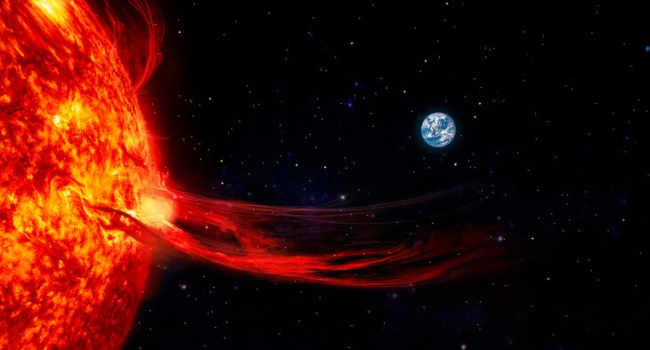
On the night of November 6, 2025, Earth was struck by moderate to strong geomagnetic disturbances on a planetary scale, according to the Solar Astronomy Laboratory of the Space Research Institute (IKI RAS). The Kp index reached G2–G3 levels, indicating significant magnetic activity. These storms were triggered by plasma clouds from recent solar flares, and scientists warn that conditions may intensify within the next 24 hours.
The Cause: An Unexpected Solar Impact
Geomagnetic storms occur when streams of charged particles from the Sun disturb Earth’s magnetic field. This episode was caused by coronal mass ejections (CMEs) that took place on November 3–4. Initially, the active regions on the Sun’s disk were positioned at the edge, and forecasts did not anticipate a direct impact. However, the plasma changed trajectory, veering toward Earth instead of moving radially outward.
The speed and spread angle of the plasma clouds turned out to be higher than expected, amplifying the effect. “The plasma’s non-linear motion — deflecting toward Earth — made the impact unexpected,” experts at IKI RAS explained. These events are part of Solar Cycle 25, which peaks in 2024–2025, a period of heightened solar activity.
Current Conditions and the Next 24 Hours
As of November 6, the Kp index fluctuates between G2 and G3, corresponding to moderate and strong geomagnetic storms. This level of activity can cause auroras at mid-latitudes, radio communication interference, GPS navigation errors, and power grid fluctuations. In Russia, residents of northern regions — from Murmansk to Krasnoyarsk — can expect visible auroras.
According to IKI forecasts, the disturbances are likely to last about 24 hours before entering a main phase, as denser plasma clouds approach Earth, potentially intensifying activity. “Cautious forecasts for the next 24 hours suggest stronger storms, possibly up to G4,” scientists warned. The full picture will become clear within 12–18 hours, once the plasma fully interacts with Earth’s magnetosphere.
Potential Effects on Earth
Geomagnetic storms can disrupt both technology and nature. In power systems, they increase the risk of transformer overloads — similar to the Quebec blackout of 1989. In aviation, they can cause GPS and communication failures, while satellites may experience increased radiation exposure. For humans, sensitive individuals may experience headaches, fatigue, or insomnia; migratory animals may become disoriented.
In Russia, HF radio disruptions are possible across the Far East and Siberia. Recommended precautions: drivers should double-check GPS data, power operators should monitor grid loads, and skywatchers can enjoy spectacular auroral displays.
In Brief…
Strong geomagnetic storms (G2–G3) began on November 6 due to solar plasma ejections from November 3–4 that unexpectedly shifted toward Earth and moved faster than predicted. Disturbances will persist for about a day and may strengthen to G4 levels. Possible impacts include GPS disruptions, power system fluctuations, and auroras visible across northern regions. IKI RAS continues to monitor the situation as Solar Cycle 25 remains at its peak.