make preferable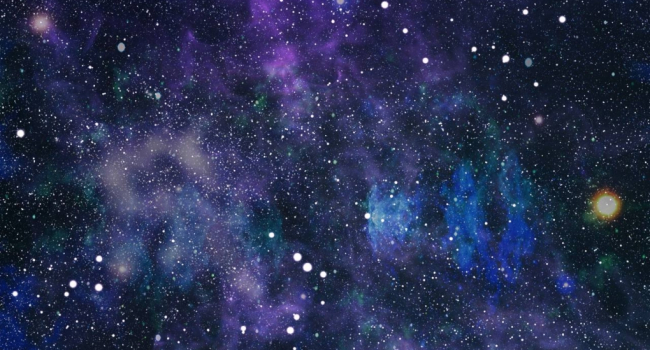
Astronomers have finally peered into the most desolate regions of the Universe and confirmed: in the depths of cosmic voids, there truly is nothing. These gigantic “bubbles” are not just gaps between galaxies, but a key to understanding the structure of the cosmos. New methods for analyzing millions of voids have shown that matter density there is five times lower than the cosmic average, and in the deepest regions lies absolute emptiness—where atoms pass by only once every few million years, reports Universe Today.
What Are Cosmic Voids
Cosmic voids are enormous spheres ranging from 30 to 500 million light-years across, where galaxies are almost absent. The average matter density inside them is only 20% of the universal average: if all matter (stars, gas, dark matter) were evenly distributed, each cubic meter would contain one hydrogen atom. In voids—just 0.2 atoms.
They are not random: gravity pushes matter outward, forming “walls” — filaments of galaxies. Voids make up 80% of the Universe’s volume but contain only 20% of its mass. It’s like “cosmic foam”: galaxies along the edges, emptiness within.
Structure Inside: Fractals and Filaments
Computer simulations (IllustrisTNG, Millennium) show that voids are fractal in nature. Within large ones lie smaller ones, threaded with wisps of gas and dwarf galaxies (such as Leo T or Segue 1). These “residents” are rare — just one galaxy per billions of cubic light-years.
Gas filaments form a “web” of hydrogen and helium heated to 100,000 K. They connect voids to the surrounding cosmos, but within, the matter remains extremely diffuse.
Absolute Void: Nothing and No One
New algorithms (VOIDFINDER, ZOBOV) have identified millions of voids using data from SDSS and DESI. In the deepest ones, there are no galaxies, no gas, no light. Density drops below 10⁻³⁰ g/cm³ — an atom passes through only once in millions of years. There isn’t even relic radiation — it exists everywhere, but here there’s no matter for it to interact with.
For comparison: in the interstellar space of the Milky Way, there’s 1 atom per cubic centimeter; in voids — 1 per 5 cubic meters.
Why Voids Matter
They serve as indicators of dark energy, expanding the Universe faster than galaxies do. Studying their shape and growth (via BOSS, Euclid) refines the ΛCDM model. Voids account for about 50% of the observed acceleration of cosmic expansion.
If the Solar System were moved to the center of a void, the sky would be black — only the Sun, Moon, and planets visible. With no stars, civilization would never have discovered galaxies or the Big Bang. This “cosmic isolation” offers one possible angle on the Fermi Paradox.
In Short…
Cosmic voids make up 80% of the Universe’s volume but only 20% of its mass, with a density of 0.2 atoms per cubic meter. Inside them lie fractal filaments and rare dwarf galaxies; at the core — absolute emptiness. New maps (SDSS, DESI) confirm: there is truly nothing there. Voids reveal the nature of dark energy; within them, the sky is black — an end to astronomy for any hypothetical inhabitants.