make preferable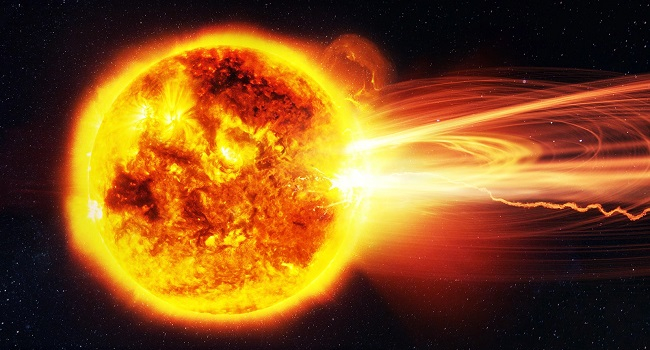
Solar activity is gaining momentum, and a further intensification is expected on November 3, 2025. According to the Solar Astronomy Laboratory of the Space Research Institute (IKI) of the Russian Academy of Sciences, flare activity will continue to rise, potentially affecting space weather. This information comes from the latest forecast published today.
Forecast for November 3: Possible Disturbances
“Flare activity — further increase expected. Geomagnetic conditions — possible episodic geomagnetic disturbances,” the IKI RAS report states.
On the previous day, November 2, geomagnetic conditions remained calm, while flare activity was moderately elevated.
Experts estimate that the current wave of activity will peak between November 3 and 9. This marks the beginning of a sustained upswing, caused by powerful active regions rotating into the Sun’s Earth-facing side.
Flares Resume After a Pause
Solar flares have resumed after a two-week lull. Around 4:00 a.m. Moscow time on November 2, astronomers recorded an M1.0-class event near the Sun’s eastern edge. This was the first notable flare in the past two weeks, signaling a reawakening of solar activity.
Earlier, on October 30, large coronal mass ejections (CMEs) occurred on the far side of the Sun, closer to the equator, and were registered by observatories. These eruptions took place just below the main active region, which is now partially visible from Earth.
Active Region AR 4246 Takes the Stage
The AR 4246 active region plays a key role, having previously generated a series of powerful X-class flares — the strongest on the scale. It is now turning toward Earth, carrying the potential for new events.
Scientists note that the entire visible part of the Sun is “charged” with excess energy, increasing the likelihood of CMEs and geomagnetic storms.
In the coming days, activity is expected to range from low to moderate, but with a 65% probability of M-class and 25% probability of X-class flares through mid-November. Such events can cause radio interference, satellite communication disruptions, and auroral displays at high latitudes.
Possible Effects on Earth
The increase in flares is part of the 25th solar cycle, whose peak occurred during 2024–2025. Geomagnetic disturbances (up to Kp 4) could affect:
- Radio and GPS: brief signal disruptions.
- Power systems: potential overload risks.
- Space missions: increased radiation exposure for satellites and astronauts.
Residents of northern Russia (Murmansk, Arkhangelsk) may have a chance to witness northern lights. Monitoring updates from NOAA SWPC and IKI RAS is recommended.
In Short
On November 3, 2025, solar flare activity is expected to rise, with possible geomagnetic disturbances (Kp 4), according to IKI RAS. Flares have resumed after a pause: an M1.0-class flare was recorded on November 2, and AR 4246, known for X-class events, is now facing Earth. The wave’s peak will last through November 9. Risks to communication and power systems remain minimal, but auroras are possible. Stay tuned — the Sun is in the midst of its active cycle.