make preferable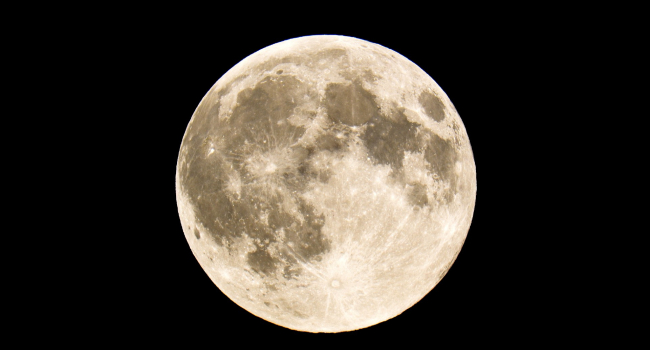
The Moon, which has inspired humanity for millennia, is believed to have formed about 4.5 billion years ago after a massive collision between the young Earth and a Mars-sized protoplanet known as Theia. New computer models developed by researchers from Imperial College London have reinforced the idea that this catastrophic event was the key moment that shaped both our planet and its natural satellite.
Astrophysicist Jacob Kegerreis, who studies the early Solar System through supercomputer simulations, explained that the giant impact not only gave birth to the Moon but also triggered a series of consequences that influenced Earth’s evolution. According to him, without the Moon, there would be no tides — and life might never have made the leap from water to land.
Simulating the Catastrophe
The research team used smoothed-particle hydrodynamics models to recreate the early stages of planetary formation. Kegerreis explained that their simulations describe the system as millions of particles, each representing a small piece of matter. The supercomputer calculates how these particles move and interact under the influence of gravity and pressure.
The simulations indicate that without such a colossal impact, it would be impossible to explain how enough material could have been ejected into orbit to form the Moon. During the collision, Theia struck Earth at an angle, melting part of the mantle and ejecting superheated debris into space. This glowing cloud of fragments gradually coalesced to become the Moon.
Traces in Motion and on the Surface
Today, the Moon moves about 3.8 centimeters farther from Earth each year. By tracking this motion, scientists can reconstruct the history of its orbit and estimate how fast the Earth rotated shortly after the impact. In the planet’s early years, a day lasted only five to six hours, and the Moon orbited ten times closer than it does now.
Unlike Earth — whose surface is constantly reshaped by winds, water, and tectonic activity — the Moon has remained almost unchanged for billions of years. Its craters, basalt plains, and rock samples preserve a record of the ancient cataclysm, making it a kind of “archive” of the early Solar System.
The Puzzle Isn’t Fully Solved
Kegerreis emphasized that the formation of the Moon remains a vast puzzle with many missing pieces. He noted that to truly understand its origin, scientists must keep improving their models and continue studying the Earth–Moon system.
Upcoming missions, such as NASA’s Artemis program and China’s sample-return projects, are expected to refine our understanding by comparing the composition of lunar and terrestrial rocks. For now, simulations strongly support the theory that without Theia, neither the Moon nor life on Earth as we know it would exist.
In Short
The Moon formed 4.5 billion years ago from debris produced when a Mars-sized protoplanet named Theia collided with Earth. Supercomputer simulations from Imperial College London confirm that only such an impact could have ejected enough material into orbit. Without the Moon, tides — and perhaps the evolution of life itself — might never have emerged. Its ancient surface preserves evidence of that distant catastrophe, while its gradual retreat of 3.8 cm per year helps scientists retrace the past. The mystery may be largely solved, but the finer details are still unfolding.