make preferable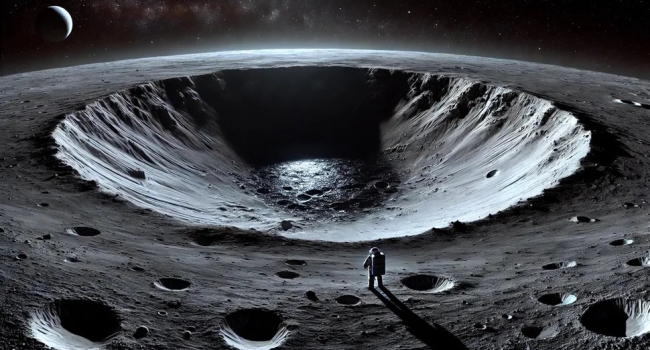
Earth’s Moon is a true treasure trove of resources. Space agencies around the world are planning missions to access and utilize lunar volatiles — including hydrogen, water, helium, carbon dioxide, and carbon monoxide. These substances could be used to produce fuel, breathable air, and even drinking water — all essential for establishing long-term lunar bases.
However, much remains unknown about the presence of water ice on the Moon and about the data needed to guide both robotic and crewed lunar exploration. That’s why an upcoming international meeting will focus on the current state of knowledge about lunar polar volatiles.
The goal of the gathering in Honolulu, Hawaii, is to prepare for a wave of upcoming robotic and human expeditions from multiple nations aimed at locating, studying, and utilizing lunar polar volatiles. The Second Conference on Lunar Polar Volatiles, taking place November 12–14, will bring together participants from U.S. academic institutions as well as representatives from China, Canada, and several private space companies.
What’s Missing?
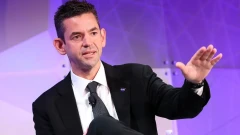
“I think there are at least three aspects of lunar polar volatiles that we’re missing,” said conference organizer Shuai Li of the University of Hawaii’s Institute of Geophysics and Planetology.
First, he explained, a comprehensive mapping of key volatiles in the Moon’s permanently shadowed regions (PSRs) is critically needed — and currently missing.
For example, while water ice may be the most abundant volatile, scientists still lack reliable maps showing its distribution, especially in areas with only a few weight percent or less. Other volatiles — such as hydrogen sulfide, carbon monoxide, or carbon dioxide — might exist in even smaller amounts.
“We have no direct observations of these volatiles,” Li emphasized.
Second, little is known about the vertical distribution of volatiles, including water ice.
Third, sample collection is essential to understand their origin, formation, and accumulation on the Moon.
Just the Beginning
Norbert Schörghofer, senior scientist at the Planetary Science Institute and Honolulu resident, is a co-organizer of the meeting.
“In my view, the field of lunar polar volatiles is only just beginning,” he said. Many missions — such as NASA’s recently revived VIPER rover, designed to study volatiles in polar regions — have been delayed, leaving scientists without sufficient data to assess the abundance and distribution of lunar water ice.
“What we need most,” Schörghofer noted, “is definitive proof that ice exists on the Moon.”
In Search of Final, Reproducible Evidence
In October 2009, NASA’s Lunar Crater Observation and Sensing Satellite (LCROSS) was intentionally crashed into a permanently shadowed crater near the Moon’s south pole to confirm the presence of water ice.
“LCROSS detected six percent — not a lot of ice, and it was a one-time experiment,” said Schörghofer. “Spectroscopic detections of surface ice from orbit remain hopelessly contradictory. We need final and reproducible proof.”
He pointed to major progress in understanding water inside lunar rocks thanks to samples returned by China’s Chang’e-5 and Chang’e-6 missions from the Moon’s near and far sides.
“However, progress on studying ice itself has been shockingly small,” he said, “mainly because there have been no lander missions in polar regions. Scientists are trying to extract information about ice from data collected for other purposes, using instruments not designed to detect lunar volatiles — and as a result, most of what we get are ‘maybe’ observations.”
International Collaboration
How is international cooperation evolving in this field? Is more coordination between nations needed?
“Progress is very slow, but we are seeing growth,” said Li.
A major step forward is the collaboration between the U.S. and South Korea: the Korean Pathfinder Lunar Orbiter (KPLO), also known as Danuri, carries NASA’s ShadowCam, developed by Arizona State University and Malin Space Science Systems, designed to peer into the Moon’s dark PSRs.
According to Schörghofer, lunar exploration in the coming decades will be led primarily by the U.S. and China.
“International cooperation is welcome and expands scientific interest in the Moon,” he said. “The level of collaboration will undoubtedly grow, but ultimately we will see competition between the two superpowers.”
Sharing the Findings
Much uncertainty remains about the quantity and exact locations of lunar ice.
“The known and easily accessible reserves are likely quite small at this point,” Schörghofer explained. “We need definitive measurements of ice content.”
“More international cooperation is definitely needed,” added Li. “For example, many missions to the Moon’s south pole are planned in the coming years. It would be extremely beneficial for all countries to share their findings on lunar volatiles — not just for science, but for future resource utilization.”
In brief:
The Moon holds volatile compounds, including water ice, but their exact quantity, distribution, and origin remain unclear due to a lack of direct observations, vertical data, and samples. Missions have been delayed, evidence remains contradictory, and progress is limited without landings in polar regions. The upcoming Honolulu conference will bring together experts to prepare for future expeditions. International cooperation is growing slowly but remains overshadowed by U.S.–China competition; sharing data on lunar volatiles will be key for both science and sustainable resource use.