make preferable
An international team of astronomers from Tel Aviv, Leuven, and Amsterdam universities has made a groundbreaking discovery: for the first time, direct evidence shows that the Universe’s first-generation stars — Population III — were born mainly in pairs. The finding overturns long-standing cosmological models and sheds light on why heavy elements appeared so rapidly. The results were published in The Astrophysical Journal (AJ).
Who Were the Population III Stars and Why They Matter
Population III stars were the first lights in the Universe, forming just 100–200 million years after the Big Bang. They were immense — hundreds or even thousands of solar masses — and composed only of hydrogen, helium, and traces of lithium, with no “metals” (heavier elements).
Despite their short lives, lasting only a few million years, these titans transformed the cosmos. In their cores, elements such as carbon, oxygen, silicon, and iron were forged for the first time. When they exploded as pair-instability supernovae, they dispersed this material into space — seeding galaxies, planets, and eventually life itself. Without them, neither Earth nor humanity would exist.
The Old Theory: Lone Giants
For decades, astronomers believed Population III stars formed alone. Classic models from the 1990s–2010s described a scenario where a massive gas cloud collapsed under gravity, and turbulence plus magnetic fields prevented fragmentation — producing a single colossal star.
But new supercomputer simulations have challenged this view, suggesting that protostellar disks are unstable and often fragment into two or more stars. Until now, there had been no observational proof.
The Proof from a “Cosmic Time Machine”: The Small Magellanic Cloud
To test this hypothesis, researchers turned to the Small Magellanic Cloud (SMC) — a dwarf galaxy orbiting the Milky Way. Its metallicity is about ten times lower than that of the Sun, making it a close analogue of the early Universe.
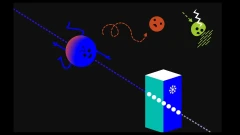
Using the Very Large Telescope (VLT) in Chile and the FLAMES spectrograph, the team analyzed the spectra of nearly a thousand massive stars (each over 20 solar masses). By studying the radial velocity shifts — tiny changes in spectral lines caused by orbital motion — they found that at least 70% of these stars are in close binary systems with orbital periods under 1,000 days.
This is the first direct observation of a mechanism that likely operated 13 billion years ago.
How Binary Stars Accelerated the Universe’s Evolution
Binary stars aren’t just two suns orbiting each other — their interactions ignite powerful processes that shaped the young cosmos:
- Mass transfer: One star siphons material from its companion, altering both of their lifecycles.
- Mergers: Collisions create supermassive black holes — the kind detected by LIGO.
- Asymmetric supernovae: Explosions become lopsided, ejecting material unevenly and enriching surrounding gas more efficiently.
- Pair-instability events: Complete stellar annihilations producing maximum yields of heavy elements.
Thanks to these interactions, the chemical evolution of the Universe sped up, allowing galaxies to form much earlier than traditional models predicted.
What Comes Next: From JWST to the ELT
The discovery opens a new era of exploration. Between 2026 and 2028, the James Webb Space Telescope (JWST) will begin searching for relic Population III stars in galaxies at redshifts z > 10. By 2030, the Extremely Large Telescope (ELT) — with its 39-meter mirror — will be able to resolve binary systems billions of light-years away.
Simulations already suggest that up to 20% of the first stars may have formed in triple systems.
In Short…
At least 70% of Population III stars formed in pairs, as proven by spectroscopic studies of the Small Magellanic Cloud. This discovery explains the rapid enrichment of the early Universe with heavy elements and the accelerated birth of galaxies. The first stars were not solitary giants but cosmic duos dancing in unison, laying the foundations for everything that exists today.