make preferable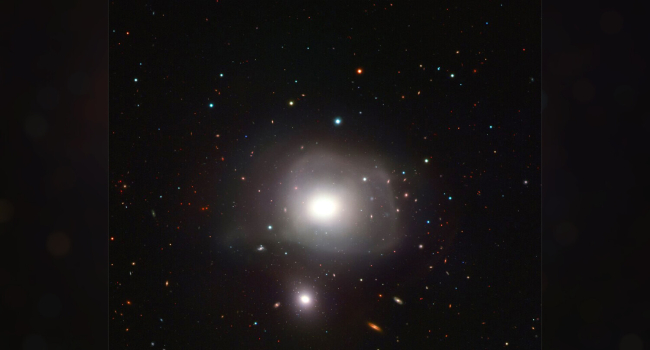
Astronomers studying archival sky photographs from the Palomar Observatory (1949–1957) have discovered a series of mysterious bright points that appeared on one plate and vanished on the next. Statistical analysis revealed that these brief flashes — known as transients — were highly likely to coincide with dates of ground-based nuclear tests. The study was published in Scientific Reports (SR).
What Are Transients and How They Were Found
Transients are astronomical objects visible only in a single frame of a photographic sequence. On Palomar’s glass plates, taken hours or days apart, these flashes looked like stars but were absent in neighboring images. Previously, they were dismissed as artifacts — scratches, dust, emulsion defects — or meteors burning up in the atmosphere.
However, for the first time, this new study conducted a systematic search and statistical comparison with external events. The research team digitized and analyzed thousands of photographic plates, identifying dozens of transients. They then compared the flash dates with the official schedules of U.S. and Soviet nuclear tests, as well as with archived reports of UFOs (now officially UAPs — Unidentified Anomalous Phenomena). The results were striking: the flashes were not random.
Statistics That Don’t Lie
Over the observation period, scientists analyzed 2,718 nights. Their key findings include:
- The probability of a transient increased by 45% within 24 hours after a nuclear explosion.
- Each additional UAP report raised the transient frequency by 8.5%.
- Peaks in UAP activity also matched nuclear test schedules, particularly in 1952–1953 and 1957.
These correlations passed rigorous statistical tests that ruled out chance coincidence. The authors emphasize that this is the first empirical confirmation of a link between nuclear activity and anomalous aerial phenomena — supported not only by eyewitness reports but by objective astronomical data.
Possible Physical Mechanisms
How could a nuclear blast trigger flashes thousands of kilometers away? The researchers propose several hypotheses:
- Electromagnetic Pulse (EMP): A powerful gamma burst from the explosion could ionize upper atmospheric layers, producing short-lived glows or reflective effects.
- Radioactive Particles: Isotopes released into the stratosphere might interact with Earth’s magnetic field, generating localized auroras or plasma formations.
- Atmospheric Lensing: Shock waves could distort air density, temporarily focusing starlight — a mirage-like optical effect.
- Unknown Technologies or Reactions: Some transients may be traces of unidentified aerial vehicles responding to nuclear activity (the UAP hypothesis).
None of these models fully explain the data yet, but the statistical correlation itself is now established.
From UFOs to UAPs: A Paradigm Shift
The term “Unidentified Anomalous Phenomena (UAP)” has officially replaced “UFO” in U.S. government and NASA documents to remove science-fiction associations. This study exemplifies how archival data can move the conversation from speculation to empirical science.
“Our results provide empirical evidence for the existence of the UAP phenomenon and its possible correlation with nuclear activity, extending the discussion beyond anecdotal reports,” the authors write.
What’s Next: New Archives and Missions
Encouraged by the Palomar results, researchers plan to broaden their investigation:
- Digitization of additional archives from the Lick, McDonald, and Crimean observatories.
- Comparison with data from high-altitude nuclear tests (e.g., Starfish Prime, 1962).
- Monitoring by modern sky surveys such as Zwicky Transient Facility (ZTF) and LSST, looking for similar flashes near current test sites (North Korea, India).
In Brief
Archival Palomar sky plates (1949–1957) revealed transient flashes coinciding with nuclear test dates — a 45% higher probability after explosions and 8.5% increase per UAP report. For the first time, a statistical link between nuclear activity and anomalous aerial phenomena has been established, opening a new chapter in studying UAPs and atmospheric effects of atomic detonations.