make preferable
Researchers at the Center for Quantum Information, Korean Institute of Science and Technology (KIST) have unveiled the world’s first distributed quantum sensing system that simultaneously enhances both measurement precision and spatial resolution. Led by Dr. Hyang-Tag Lim, the team has paved the way for ultra-sensitive metrology, next-generation quantum microscopy, and astronomical observations of unprecedented accuracy. The results were published in Physical Review Letters (PRL).
The Standard Quantum Limit — Once Deemed Unbreakable
All measurements involving light and matter are constrained by the Standard Quantum Limit (SQL) — a fundamental boundary of sensitivity derived from Heisenberg’s Uncertainty Principle. Distributed quantum sensors could previously boost precision but did so at the cost of resolution, preventing them from distinguishing fine structural details.
The Key Discovery: Multi-Mode N00N State
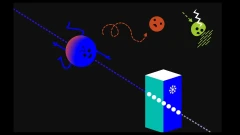
The KIST team achieved a world first by employing a multi-mode N00N state, in which multiple photons are entangled across several optical channels simultaneously. This configuration generates ultra-dense interference fringes, effectively turning the setup into a super-sensitive “quantum eye.”
In their experiment, the researchers used a two-photon N00N state distributed across four channels, which allowed them to:
• Measure two independent phases simultaneously;
• Increase measurement precision by 88% compared to classical methods;
• Come close to the Heisenberg limit — the theoretical maximum of quantum sensitivity.
From Laboratory to Real-World Applications
According to Dr. Hyang-Tag Lim, this breakthrough demonstrates the practical power of quantum entanglement:
“Our results open the door to real quantum sensor networks. Combined with silicon-based quantum chips, such systems could become part of everyday technology — from medical scanners to space telescopes.”
Promising Applications
• Quantum Microscopy: Imaging at molecular and submolecular scales.
• Astronomy: Detecting exoplanets and gravitational waves with unprecedented clarity.
• Metrology: Calibrating instruments with precision beyond the limits of classical physics.
In Brief
Scientists at KIST have created the first distributed quantum sensing network based on multi-mode N00N states, achieving an 88% improvement in measurement precision while maintaining high resolution — bringing humanity closer to the Heisenberg limit and marking the dawn of ultra-sensitive quantum technologies for science and everyday life.