make preferable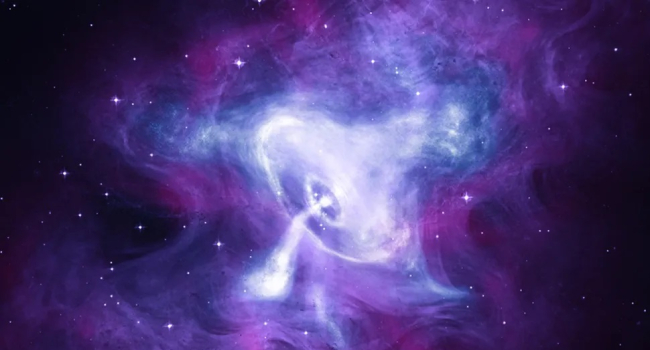
Scientists have proposed a new way to distinguish between gravitational waves produced by the merger of supermassive black holes and those originating from the Big Bang — by analyzing the unique “rhythms” these waves create. According to Space.com, a study published in the Journal of Cosmology and Astroparticle Physics suggests that these cosmic ripples can be detected using pulsars — dead stars that spin at astonishing speeds.
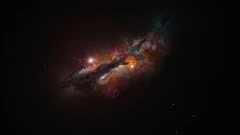
During the Big Bang, quantum fluctuations in the early Universe expanded along with space itself, generating what are known as primordial gravitational waves. These waves are thought to still permeate the cosmos today. Added to them are waves from other sources, such as mergers of supermassive black holes in distant galaxies. Together, they form a faint, persistent gravitational-wave background — a subtle “ripple” in the fabric of space-time. But how can it be detected?
Pulsars: The cosmic clocks
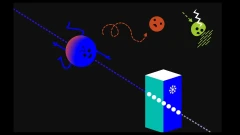
To search for this gravitational background, astronomers use networks of pulsars — the remnants of massive stars that emit beams of radio waves from their magnetic poles, much like cosmic lighthouses. These beams reach Earth as regular pulses, making pulsars some of the most precise timekeepers in the Universe. Any deviation in their timing indicates an external influence — for instance, a gravitational wave passing between Earth and the pulsar.
When several pulsars in the same region of the sky simultaneously show the same slight shift in their pulse timing, it points to the presence of a gravitational wave. In 2023, the North American Nanohertz Observatory for Gravitational Waves (NANOGrav), working with collaborators in Australia, Europe, and India, published data hinting at the possible detection of such a background using pulsar arrays. Although the results remain preliminary, they have inspired the next step — distinguishing between different sources of these waves.
The “rhythms” of black holes
Physicists Hideki Asada and Shun Yamamoto from Hirosaki University in Japan have proposed a method to tell gravitational waves apart based on their interference patterns. They examined the scenario in which pairs of nearby supermassive black holes generate strong signals. When two such systems emit waves at similar frequencies, the waves can interfere with each other, creating a rhythmic pattern similar to acoustic beats.
This “beat” effect arises from the superposition of waves emitted by two pairs of black holes with comparable masses and distances. As their peaks and troughs align, they produce alternating zones of constructive and destructive interference. This modulation subtly alters the timing of pulsar signals — but detecting it will require instruments far more sensitive than those currently available.
Why it matters
Being able to separate gravitational waves from different sources could help scientists estimate how many supermassive black hole binaries exist in the Universe and what their masses are. Even more importantly, isolating these signals from the primordial gravitational waves generated in the first fractions of a second after the Big Bang could provide new insight into the birth of the Universe.
Primordial waves are considered a key to understanding cosmic inflation — the period of extremely rapid expansion that shaped the Universe’s earliest moments.
In summary
Researchers are using pulsars — rapidly spinning dead stars — as precise cosmic clocks to capture gravitational waves originating from both the Big Bang and black hole mergers. In 2023, NANOGrav found evidence suggesting the existence of a gravitational-wave background. The new study proposes identifying waves by the “beats” created by pairs of black holes, a discovery that could deepen our understanding of these systems and unlock clues about the Universe’s inflationary past.