make preferable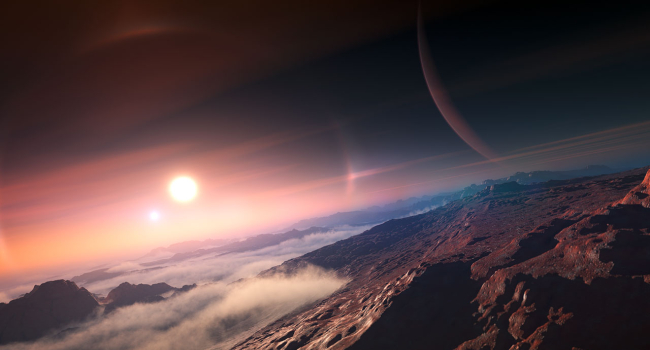
The number of confirmed exoplanets has recently surpassed 6,000, and astronomers are preparing for a surge of new discoveries. According to NASA’s Exoplanet Archive, as of early October 2025, 6,022 exoplanets have been confirmed — and that number continues to rise rapidly. However, as Caltech astronomer Aurora Kesseli told Space.com, none of them resemble Earth. She explained that although 6,000 planets have been discovered, not one is truly Earth-like, which is why scientists continue their search — hoping to find a rocky planet in the habitable zone of a Sun-like star. Future missions such as PLATO, the Roman Space Telescope, and Earth 2.0 are being designed specifically to detect Earth-sized, potentially habitable worlds.
New Missions: From Transits to Microlensing
The next decade will see the launch of three major observatories. In December 2026, the PLATO mission (PLAnetary Transits and Oscillations of Stars) from the European Space Agency will begin searching for planetary transits, including Earth-like worlds within habitable zones. A year later, in 2027, NASA’s Nancy Grace Roman Space Telescope will head to the L2 Lagrange point to search for planets through gravitational microlensing. Then, in 2028, China will launch Earth 2.0, also to L2, with a focus on detecting terrestrial planets around Sun-like stars via transits.
Together with the already active TESS (Transiting Exoplanet Survey Satellite), these missions are expected to generate a flood of data — possibly up to 100,000 transit candidates. Kesseli noted that the Exoplanet Archive will face a major challenge handling the data volume from PLATO, Earth 2.0, and Roman, and emphasized that each candidate will require careful verification, either statistically or by measuring its mass through radial velocity observations.
Astrometry from Gaia: Thousands of Giants
By late 2026, the Gaia mission (ESA) will release a catalog of exoplanets discovered via astrometry, a method that measures the subtle sideways motion of stars caused by orbiting planets. So far, fewer than ten planets have been found this way, but Gaia — the most sensitive instrument for this purpose — is expected to identify thousands of candidates, mostly gas giants. Kesseli explained that smaller, less massive planets exert weaker gravitational tugs, making them harder to detect. While the radial velocity method (used to discover 51 Pegasi b) measures Doppler shifts, astrometry captures the lateral “wobble” of a star.
Microlensing with Roman: Distant, but Statistically Powerful
The Roman Space Telescope, equipped with a 2.4-meter mirror and a wider field of view than Hubble, will scan the center of the Milky Way for microlensing events — brief magnifications of background stars caused by the gravity of planets. Scientists expect around 2,000 detections, sensitive to distant worlds possibly located in habitable zones. Kesseli explained that these planets won’t be seen directly, but inferred from temporary brightening of background stars. Most will be located in the Galactic bulge, too far for follow-up observations, but the mission will still provide valuable statistics about how common Earth-like planets are around Sun-like stars. Microlensing is especially effective for detecting planets far from their stars.
From Discovery to Characterization: Atmospheres and Beyond
The first 30 years of exoplanet research were focused on discovery and statistics; the next phase will center on characterization, particularly studying planetary atmospheres through transit spectroscopy. The James Webb Space Telescope (JWST) is already analyzing the atmospheres of planets around red dwarfs such as TRAPPIST-1, but so far, results have been inconclusive. Kesseli pointed out that no atmospheres have yet been confirmed, though researchers expect clearer data soon. Red dwarfs are cool and volatile, and their planets are tidally locked and exposed to intense radiation.
By the late 2020s, the ARIEL mission (ESA) will launch to conduct a census of exoplanet atmospheres, mostly those of Neptune- and Jupiter-sized planets. Detecting atmospheres around true Earth analogues will require 30-meter-class ground-based telescopes or direct imaging, but Kesseli expressed doubt that such observations will be feasible without dedicated instruments.
Habitable Worlds Observatory: Finding Earth 2.0 in the 2040s
The next big leap will come with NASA’s Habitable Worlds Observatory (HabEx), planned for the 2040s. This telescope, featuring an 8-meter mirror — larger than JWST’s — will use a coronagraphic starshade to block starlight and capture the faint glow of planets directly. HabEx will be able to image exoplanets as single points of light, but with spectra revealing oceans, continents, vegetation, and possibly even signs of civilization. Kesseli emphasized that this mission will be the key to finally finding a truly Earth-like planet. NASA’s latest decadal survey lists HabEx as a top scientific priority for the coming decades.
In Brief...
Over 6,000 exoplanets have been confirmed as of October 2025 (6,022 in total), but none are true Earth analogues. Upcoming missions — PLATO (2026), Roman (2027), Earth 2.0 (2028), and Gaia — will add over 100,000 candidates. Microlensing and astrometry will expand statistical knowledge, ARIEL will probe gas giant atmospheres, and JWST continues work on red dwarf systems. By the 2040s, HabEx aims to directly image potentially habitable worlds — bringing humanity closer than ever to discovering Earth 2.0.