make preferable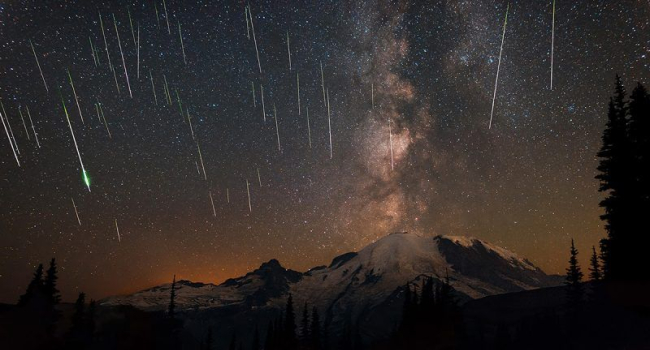
October promises astronomy enthusiasts a series of small meteor showers — quiet yet mesmerizing celestial displays. This month will feature the Delta Aurigids, Southern Taurids, Epsilon Geminids, and Leo Minorids. These rare events, some still shrouded in scientific mystery, can be observed with the naked eye. Yevgeny Burmistrov, an expert from Perm National Research Polytechnic University (PNRPU), told Gazeta.Ru when and how best to catch these “falling stars.”
Delta Aurigids: A Mystery Without a Parent
From October 10 to 18, peaking on October 11, the Delta Aurigids will be active. Their radiant — the point in the sky where the meteors appear to originate — is located in the constellation Auriga. The intensity is low, about two meteors per hour, but this is one of autumn’s most intriguing showers: scientists still haven’t identified its parent body — whether a comet or an asteroid. Amateur astronomers could make valuable contributions through their observations.
Southern Taurids: Bright Fireballs from a Fast Comet
The Southern Taurids are active from late September to November, with a maximum on October 12–13. Their parent body is Comet 2P/Encke, which has an exceptionally short orbital period of 3.3 years. This shower is famous for its bright fireballs — large comet fragments that shine brighter than the Moon. With an atmospheric entry speed of just 27 km/s, the flashes appear slow, making them ideal for photography.
Burmistrov advised that these fireballs are a gift for astrophotographers, as they can be captured with a long exposure. The best time for viewing is from 9 p.m. to 2 a.m., especially on the night of October 12–13, when moonlight won’t interfere.
Epsilon Geminids: Fast Flashes from an Ancient Visitor
Active from October 14 to 27, the Epsilon Geminids will peak on the night of October 17–18 — just two days before the new moon, when the sky is at its darkest. They are associated with the long-period Comet C/1964 N1 (Ikeya), whose orbit stretches across centuries. The meteors streak across the sky at 70 km/s, producing bright, rapid trails — a true spectacle for patient observers.
Leo Minorids: Surprises from a Forgotten Comet
Active from October 13 to November 3, peaking on October 24, the Leo Minorids are modest in activity (around two meteors per hour) but unpredictable — sometimes their intensity increases severalfold. Their radiant lies in the constellation Leo Minor, and their parent body is Comet C/1739 K1, discovered nearly 300 years ago. This shower might bring an unexpected celestial fireworks show.
Observation Tips from the Expert
Burmistrov emphasized that October is a month of calm yet graceful cosmic spectacles, where each meteor is a fragment of an ancient comet burning through the atmosphere at tens of kilometers per second. The ideal viewing time is after midnight, in dark areas far from city lights. For photography, use a tripod, a wide-angle lens, and long exposure settings. And don’t forget to dress warmly — autumn nights can be chilly.
In Brief
October’s “silent” meteor showers include:
- Delta Aurigids (Oct. 10–18, peak on the 11th)
- Southern Taurids (max. Oct. 12–13, bright fireballs)
- Epsilon Geminids (Oct. 14–27, peak Oct. 17–18)
- Leo Minorids (Oct. 13 – Nov. 3, peak Oct. 24)
Watch after midnight in dark skies and capture the beauty on camera — even the rarest flashes reveal cosmic mysteries.