make preferable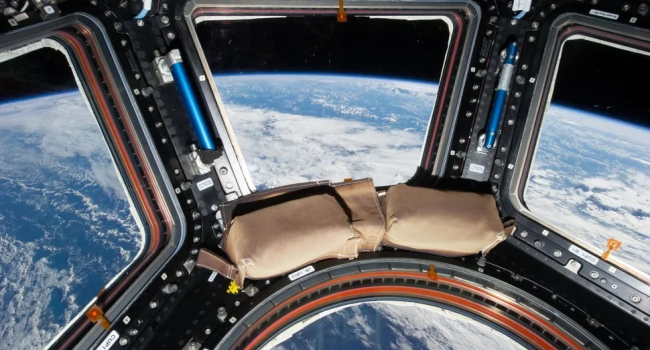
No one can say with scientific certainty why we exist or what awaits us after death. Even the nature of consciousness remains a mystery to researchers. Yet it is precisely this uniquely human urge to ask profound questions about the meaning of life—grounded in earthly “necessities” such as oxygen, gravity, and water—that pushes us to leave the familiar world and explore space. As noted by Space.com, the few who have managed to travel beyond Earth often return with new perspectives on these existential dilemmas. Many astronauts describe what is known as the overview effect—a state in which seeing the Earth as a fragile blue sphere evokes a deep sense of connection and protectiveness. However, there is another, lesser-known experience that occurs when one looks not downward, but outward into the endless expanse of stars: the ultraview effect.
The Ultraview Effect: The Wall of Stars and the Feeling of Insignificance
The term ultraview effect was introduced by anthropologist Deana Weibel from Grand Valley State University, who studies religion and interviews retired astronauts. Unlike the overview effect, which strengthens one’s bond with the planet, the ultraview effect represents a more unsettling shift in perspective caused by specific conditions in space—total darkness inside the spacecraft, when the eyes adapt to the absence of light, and extended time spent gazing not at Earth but at a “wall” or “veil” of stars. In a 2020 article in the journal Religions, Weibel explained that this experience is less about a sense of protecting Earth and more about the tangible awareness of the limits of human knowledge when faced with the vast unknown.
According to Weibel’s interviews, only two astronauts described this phenomenon vividly. One of them, identified under the pseudonym “Zack,” was an 80-year-old Apollo crew member who remained in lunar orbit while his colleagues explored the surface. In total darkness, he saw what he called a “sheet of light” — the Milky Way — and later said that he had been completely unprepared for the sight and that it made him realize humanity was not unique in the universe. This revelation led him to poetry, reflections on infinity, and even to speculations about the extraterrestrial origins of humankind. Weibel emphasized that this reaction was not necessarily spiritual, but rather a catalyst for profound contemplation about humanity’s place in the cosmos.
The Spirituality of Astronauts: Science and Faith in a Gray Zone
Many assume that space science and religion are incompatible, particularly given modern debates over vaccines and climate change. Yet the history of NASA reveals many points of intersection. During the space race of the 1950s–1970s, the atheistic USSR competed with a spiritually inspired United States, where faith was often used as a source of motivation. Even Soviet cosmonauts had their rituals—for instance, urinating at a “sacred” spot before launch, a practice reminiscent of magical thinking.
Weibel pointed out that there exists a “gray zone” between science and faith: astronauts may be religious, atheistic, or agnostic. She noted that there are many ways to be religious. Some astronauts bring personal items from childhood—such as small crosses or icons—to maintain a sense of connection to their roots, even if they no longer believe in a traditional sense. Many early spacefarers were white Christian men from military backgrounds, where base chapels were common. However, following the second Trump administration, NASA’s funding was reduced, including programs aimed at diversifying astronaut recruitment.
The ultraview and overview effects can be compared to meditative or psychedelic experiences, as both involve a temporary dissolution of the ego and heightened awareness of one’s place in the universe. Yet reproducing these states on Earth is difficult due to the small number of participants and complicating factors such as isolation, stress, and confinement.
Reproducing Revelation on Earth
In Weibel’s accounts, one astronaut—referred to as “Beverly”—remarked that the overview effect does not require a trip to space. She explained that it was not necessary to travel beyond the atmosphere to appreciate life and that she wanted her children to understand this without leaving Earth. This observation underscored that space experiences may intensify spirituality but do not create it from nothing—it is something that already exists within us.
As humanity continues its exploration of space, we will also begin to study its influence on the mind and consciousness. We will carry with us our old religions, but also new terms for the cosmic forms of “revelation” that emerge beyond the atmosphere.
In Brief
The ultraview effect is an unsettling psychological shift triggered by viewing the “wall of stars” in the darkness of space, which evokes feelings of insignificance before the unknown (as described by Deana Weibel). Unlike the overview effect, which reinforces connection with Earth, the ultraview effect transforms one’s outlook on life in the universe. Astronauts—whether atheists or believers—often bring rituals and personal items into space. The cosmos amplifies spirituality, but its roots remain on Earth. Future missions will shed more light on how consciousness responds to the weightlessness of space.