make preferable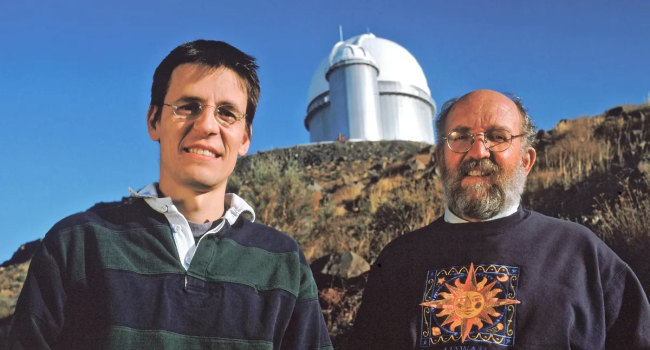
Thirty years ago, on October 6, 1995, astronomers announced a groundbreaking discovery — the first exoplanet orbiting a star similar to our Sun. The planet, named 51 Pegasi b, turned out to be a gas giant resembling Jupiter, but located so close to its star that its "year" lasts just over four Earth days, and its surface temperature reaches about 1000°C (1830°F). As reported by Space.com, this discovery marked a turning point in the history of astronomy, opening the door to countless planetary systems beyond our Solar System.
“When the first exoplanet was discovered, I thought, ‘Cool, but that’s obvious! Of course there are planets out there!’” recalls Amanda Hendrix, Director of the Planetary Science Institute in Arizona, in an interview with Space.com. The discovery of 51 Pegasi b began an era where humanity was no longer limited to studying only the Solar System. Today, more than 6,000 exoplanets have been confirmed, and statistics suggest that nearly every one of the roughly 200 billion stars in the Milky Way has its own planets.
How the First Exoplanet Was Found
The discovery was no accident — it was the result of a scientific race. Astronomers Michel Mayor and Didier Queloz from the University of Geneva used the ELODIE spectrograph on the 1.9-meter telescope at the Haute-Provence Observatory in France. The instrument measured the "wobble" of stars caused by the gravitational pull of orbiting planets — a technique known as the radial velocity method.
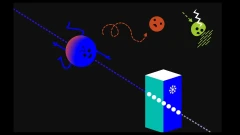
Imagine a seesaw: a parent and a child sit on opposite ends, but the center of balance lies closer to the heavier parent. To keep balance, the parent moves toward the middle. Similarly, a planet and a star orbit a common center of mass, which typically lies within the star. This causes a subtle wobble that shifts the star’s light spectrum — a Doppler shift: when the star moves toward us, its light compresses (shorter wavelengths), and when it moves away, it stretches (longer wavelengths). The more massive and closer the planet, the stronger the effect.
Mayor and Queloz measured this wobble in the star 51 Pegasi and discovered a planet 50 light-years from Earth. Since then, the radial velocity method has revealed hundreds of exoplanets, although no direct image of 51 Pegasi b exists — it’s too close to its star for current telescopes to resolve.
“Hot Jupiter”: An Unexpected Surprise
Astronomers expected planetary systems to resemble our own — rocky worlds near the star and gas giants farther out. But 51 Pegasi b was a “hot Jupiter” — a gas giant orbiting extremely close to its star. This shocked scientists because existing models of planet formation couldn’t explain such proximity. The mystery was later solved: these giants likely formed farther out and migrated inward over time.
“Using Earth and the Solar System as a template led to a big surprise. The first planets looked nothing like ours!” said Don Pollacco, lead scientist for the European Space Agency’s PLATO mission and a professor of astronomy at the University of Warwick, in an interview with Space.com. The discovery exposed the danger of scientific bias and expanded the imagination of planetary science.
In this scientific race, the second place went to Paul Butler and Geoff Marcy of the University of California, Berkeley, who confirmed the existence of 51 Pegasi b and, in 1996, discovered another “hot Jupiter” — 70 Virginis b. Although planets orbiting pulsars had been discovered earlier in 1992 (by Dale Frail and Aleksander Wolszczan), they were considered “bizarre” and unlikely to host life because of their harsh formation conditions.
Technology and Legacy: From Sci-Fi to Reality
According to Hendrix, the discovery was a matter of time: “We just needed better instruments.” By 1998, exoplanet conferences gathered hundreds of young scientists, while traditional astronomical topics were losing appeal. Today, exoplanet research has become a scientific powerhouse, uncovering mini-Neptunes, tidally locked worlds, lava planets, super-Earths, and potentially habitable candidates, though no true Earth twin has been found yet.
Young researchers inspired by 51 Pegasi b now lead thousands of discoveries using advanced telescopes and space missions. Mayor and Queloz were awarded the Nobel Prize in Physics in 2019 for their discovery. Future missions may soon unveil Earth-like worlds, adding new names to the history of science.
In Short...
On October 6, 1995, the discovery of 51 Pegasi b, the first “hot Jupiter,” launched the exoplanet revolution. The radial velocity method has since uncovered more than 6,000 worlds, revealing that planets are the norm across the universe. From the shock of “impossible” gas giants to the discovery of diverse super-Earths and habitable worlds, this finding changed astronomy forever. Now we wait for Earth 2.0.