make preferable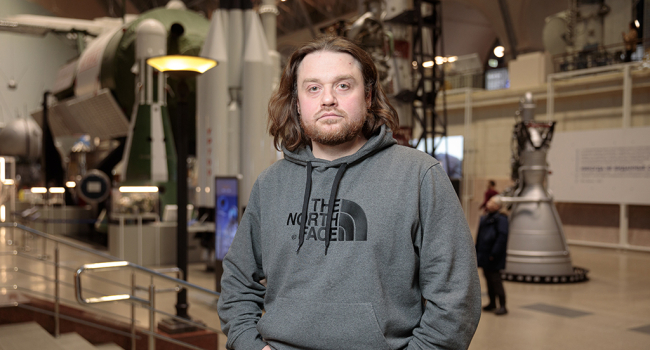
The Chelyabinsk meteor measured only about 17 meters across, yet its fall in 2013 had enormous consequences: more than 1,600 people sought medical assistance due to the shock wave and shattered glass, and the damage exceeded one billion rubles. The event served as a striking reminder of how vulnerable Earth is to relatively small cosmic objects. In an interview with TASS, Leonid Elenin — a well-known Russian astronomer, research associate at the Keldysh Institute of Applied Mathematics of the Russian Academy of Sciences, discoverer of six comets and over 1,500 asteroids, and a science popularizer — discussed the issue in detail.
Monthly Approaches: From Harmless to Dangerous
According to Elenin, every month dozens of cosmic objects about a meter in size pass close to Earth. Such “guests” pose no threat — they burn up completely in the atmosphere without causing harm. However, the situation changes dramatically when the objects measure tens of meters across. “Objects tens of meters in size already represent a more dangerous situation. Remember, the Chelyabinsk body was about 17 meters before entering the atmosphere. Not that large — yet it caused a lot of noise, both literally and figuratively,” the expert noted.
The Chelyabinsk event, in Elenin’s view, was a wake-up call for the scientific community. Before 2013, it was widely believed that bodies smaller than 100–140 meters posed no real danger. Now it is clear that even decameter-sized objects can cause serious damage to infrastructure and human health. “The Chelyabinsk event revealed how acute this problem is: even a small body can be dangerous, and we must monitor and detect them,” Elenin emphasized.
Monitoring Programs: U.S. Leadership and Detection Gaps
At the state level, systematic searches for such threats are carried out only in the United States. The “Spaceguard” program, launched in 1996, uses specialized telescopes for nightly observations. Thanks to this initiative, the number of known near-Earth objects has grown from 60 in 1981 to nearly 40,000 today. However, the situation is worse with 10–30 meter objects: about half of them are discovered only after they pass by Earth. “Unfortunately, the current warning time is roughly one day. That’s not enough for evacuation — at best, we could inform the population so people stay away from windows, avoid going outside for a while, and prevent panic,” Elenin explained.
The astronomer also pointed out that many dangerous “daytime” asteroids approach from the direction of the Sun and remain invisible to standard telescopes. Twelve years after Chelyabinsk, humanity has still not closed this critical gap in planetary defense.
New Technologies: Telescope Hunters and Future Prospects
Detection tools are improving, with new “telescope hunters” under construction. “This fall, a next-generation survey telescope with an 8.4-meter mirror is set to begin operation in Chile. It’s expected to discover millions of new asteroids,” Elenin said. Projects like NASA’s DART mission demonstrate that asteroids can be deflected by a kinetic impact — provided they are detected in time.
Elenin also actively promotes public understanding of space safety: in February 2025, he gave a lecture about the Chelyabinsk meteorite at the “Cosmos” pavilion at VDNH as part of the Interstellar Travelers project.
Elenin’s own discoveries — including a potentially hazardous 160-meter asteroid found in 2015 — underscore the importance of global cooperation. Only joint efforts among spacefaring nations can create a fully functional planetary defense system.
In Brief…
Astronomer Leonid Elenin warns that while small meteorites burn up harmlessly in the atmosphere, objects tens of meters wide — like the 17-meter Chelyabinsk meteor — can cause massive destruction. The United States leads with its Spaceguard monitoring program, but “daytime” asteroids remain a blind spot, with only about one day’s advance warning. New telescopes in Chile promise to detect millions of objects, and timely alerts could save lives in the future. Earth urgently needs stronger protection against cosmic threats.