make preferable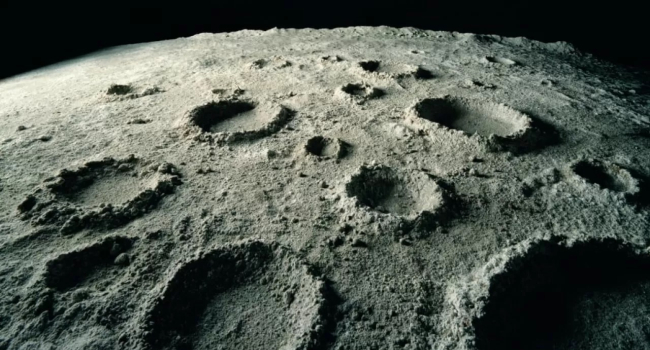
In June 2024, China’s Chang’e 6 mission delivered to Earth, for the first time in history, samples from the far side of the Moon, hidden from our view. Analysis of these fragments, collected in the giant South Pole–Aitken Basin (SPA) crater, showed that the rocks there are about 100°C cooler than those from the near side obtained by NASA’s Apollo missions.
One of the study’s co-authors, Yang Li, noted in an official statement that the near and far sides of the Moon differ greatly both on the surface and possibly in the interior. He explained that researchers call it “two-faced” and added that although the hypothesis of a significant mantle temperature difference between the sides had existed for a long time, their study was the first to confirm it with actual samples.
Surface and Internal Differences
The near side of the Moon is relatively smooth and covered with dark volcanic plains, whereas the far side has a thicker crust, is filled with mountains and craters, and has almost no lava basins. The new data suggest that these differences extend deeper — into the Moon’s mantle.
Samples from Chang’e 6, estimated to be 2.8 billion years old, were formed from mantle lava at around 1100°C — about 100°C lower than rocks from the near side. Scientists used computer modeling and satellite data to determine the temperature of the source rock that melted into magma before solidifying.
Cause of the Imbalance: Less Heat on the Far Side
The far side of the Moon likely contains fewer heat-producing elements such as uranium, thorium, potassium, phosphorus, and rare-earth elements (collectively known as KREEP). These elements release heat during radioactive decay. If, in the Moon’s early history, they migrated toward the near side, this would explain its higher temperature, active volcanism, and chemical differences.
Why this imbalance arose remains a mystery. Theories include:
- A massive asteroid impact that redistributed the Moon’s inner layers.
- A merger of the Moon with a smaller satellite that unevenly enriched the near side with heat-producing elements.
- The influence of Earth’s gravity on the distribution of these elements.
Another co-author, Xuelin Zhu, emphasized that these findings bring researchers closer to understanding the Moon’s two faces. He explained that the differences between the sides are not only superficial but also extend deep into the interior.
Significance of the Discovery and Future Outlook
Although the study does not reveal the Moon’s current internal temperatures, scientists suggest that the thermal imbalance may have persisted for billions of years, shaping the lunar landscape we see today. The results, published on September 30 in Nature Geoscience, open the way to refining models of lunar evolution.
In Short…
Samples from the Moon’s far side, collected by Chang’e 6, showed that its mantle is 100°C cooler than that of the near side because of lower concentrations of heat-producing elements (KREEP). The near side is volcanic and smooth, while the far side is mountainous and heavily cratered, with differences extending into the deep interior. The causes of the imbalance — whether asteroids, moon mergers, or Earth’s gravity — remain unclear, but the findings change the way scientists see the Moon’s “two faces.”