make preferable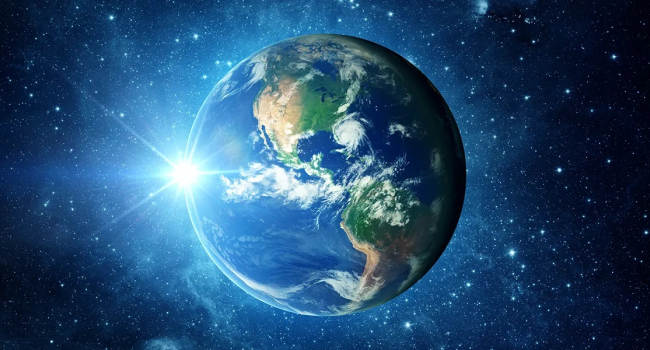
An international team of scientists led by Norman Loeb from NASA’s Langley Research Center has published a study in the Proceedings of the National Academy of Sciences (PNAS) that raises serious concern. Between 2001 and 2024, Earth has been reflecting less sunlight, leading to an increase in absorbed energy. Satellite data analysis revealed a decline in albedo — the planet’s ability to reflect solar radiation — particularly in the Northern Hemisphere.
It was previously believed that atmospheric and oceanic circulation could compensate for imbalances in Earth’s radiation budget. However, data from the past two decades show that these processes are not fully effective, and the planet is retaining more heat than expected.
Causes: Ice Melt and Aerosol Changes
The main driver of declining albedo is the reduction of snow and ice cover in northern latitudes. Since ice and snow are highly reflective, they play a crucial role in bouncing solar radiation back into space. Their loss, caused by global warming, means darker land and ocean surfaces are absorbing more energy.
Aerosol dynamics also play a role. In the Northern Hemisphere, concentrations have decreased due to strict environmental measures in Europe, the U.S., and China, reducing cloud reflectivity. In contrast, the Southern Hemisphere experienced an increase in aerosols following the Hunga Tonga volcanic eruption (2021–2022) and massive wildfires in Australia, which temporarily boosted albedo through denser cloud formation.
Scale of Change and Its Implications
The difference in the radiation balance between hemispheres amounts to about 0.34 watts per square meter per decade, compared to the average incoming solar radiation of 240–243 watts. While this deviation may seem small, scientists emphasize its statistical significance. Even such changes can amplify global warming and alter climate models.
Researchers warn that these findings call for an urgent reassessment of climate forecasts, as current models underestimate the pace of planetary warming. This is especially critical for the Northern Hemisphere, where changes are unfolding more rapidly.
In Short...
Earth is losing its ability to reflect sunlight: from 2001 to 2024, albedo has declined, particularly in the Northern Hemisphere, due to melting ice and reduced aerosol concentrations. The Southern Hemisphere has temporarily offset the effect through volcanic activity and wildfires. A 0.34-watt increase per square meter per decade is intensifying global warming, demanding updates to climate models.