make preferable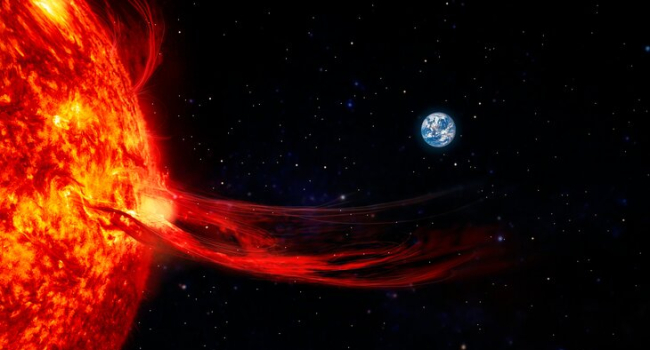
On the morning of September 29, 2025, the Sun produced an M3.6-class flare — the second-highest category of intensity, capable of influencing space weather. This was reported by TASS, citing the Institute of Applied Geophysics (IAG). Scientists warn of a high risk of geomagnetic storms within the next 24 hours.
What Happened?
The flare was recorded at 04:45 Moscow time in sunspot group 4232 (N05E46). Its strength was classified as M3.6, with a duration of 10 minutes. The M class is the second-highest level of solar flares (followed by the most powerful, X), and such events can trigger moderate geomagnetic storms, though not extreme ones.
According to IAG, elevated flare activity is expected throughout the day, with potential risks for Earth. This is part of the 25th solar cycle, whose peak is anticipated in 2025.
Context: Recent Flares
On September 27, the Solar Astronomy Laboratory of the Russian Academy of Sciences’ Space Research Institute (IKI RAS) reported calm geomagnetic conditions, though with a trend toward rising flare activity. On September 24, an M1.0-class flare occurred, lasting 47 minutes — further evidence of the Sun’s increasing activity.
Solar flares are sudden releases of energy that often produce coronal mass ejections (CMEs), which can reach Earth in 1–3 days.
Possible Consequences
M-class flares can lead to:
- Geomagnetic storms: disruptions in radio communications, GPS, and power grids.
- Auroras: visible at mid-latitudes.
- Risks for satellites: increased radiation exposure.
For Russia, the risks are moderate: some interference in aviation and communications is possible, but no global catastrophe is expected.
Forecast and Recommendations
IAG specialists predict high flare activity on September 29. Their recommendations include:
- Monitoring space weather via NASA or IKI RAS apps.
- Limiting prolonged outdoor activity during geomagnetic storms (due to risks for pacemakers).
- Radio enthusiasts should check and prepare their equipment.
In Short…
The M3.6 flare on September 29 is a sign of the Sun’s growing activity in the 25th cycle. It may cause moderate geomagnetic storms but poses no major threat to Earth. Scientists continue to monitor the situation — and auroras could provide a bonus spectacle for observers.