make preferable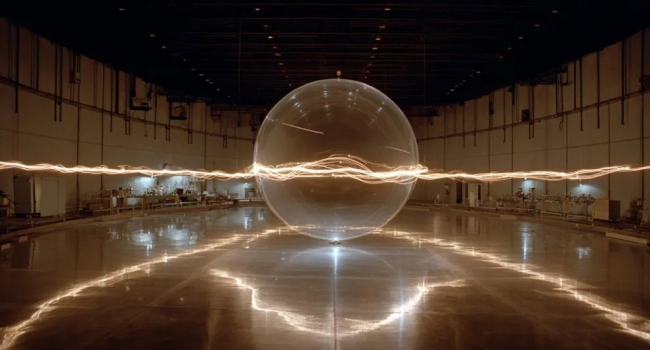
Dark matter, which makes up about 85% of the Universe’s matter, remains one of the greatest mysteries in physics. Scientists from the University of Warsaw and the Max Planck Institute for Gravitational Physics have proposed an unexpected candidate — superheavy charged gravitinos, hypothetical particles from supergravity theory. Their study, published in Physical Review Research (PRR), opens a new chapter in the search for the nature of dark matter.
What Is a Gravitino?
The gravitino is a hypothetical particle predicted by supergravity theory, which unites gravity with particle physics. These particles possess unique properties:
- Mass: close to the Planck scale — a billion billion times greater than the mass of a proton.
- Charge: electrically charged, but with minimal interaction with ordinary matter.
- Stability: due to their enormous mass, they do not decay and have existed since the Big Bang.
"Gravitinos are invisible to telescopes because of their rarity, but that makes them ideal candidates for dark matter," the authors explain.
Why Are They So Hard to Detect?
Gravitinos are extremely rare: within the Solar System, only one particle exists per tens of thousands of cubic kilometers. This makes their detection extraordinarily difficult. However, scientists calculated that new neutrino observatories may be able to capture their traces.
A key role will be played by China’s JUNO project (Jiangmen Underground Neutrino Observatory), scheduled to launch in 2025. The detector is a 40-meter-diameter sphere filled with 20,000 tons of organic liquid and equipped with 17,000 photomultiplier tubes. A gravitino passing through JUNO would leave a unique signal, unlike any other particle.
"This signal will be unmistakable — it cannot be confused with anything else," the researchers emphasize.
Significance for Physics
If gravitinos are confirmed, it would be a breakthrough:
- Dark matter: identifying its nature will bring us closer to understanding the structure of the Universe.
- Supergravity: confirmation of gravitinos would strengthen this theory.
- Unified theory: the unification of gravity with quantum physics would come closer to reality.
What’s Next?
Scientists are awaiting data from JUNO and other neutrino detectors, such as Hyper-Kamiokande in Japan. If gravitino signals are found, this will pave the way for:
- Direct experiments on dark matter.
- Refining models of the early Universe.
- Developing new theories of fundamental interactions.
In Short…
Gravitinos — superheavy charged particles — may be the key to solving the mystery of dark matter. Their rarity makes them difficult to detect, but JUNO in 2025 could capture their traces. Such a discovery would bring physicists closer to a unified theory explaining everything — from stars to atoms. Dark matter may no longer remain a mystery.