make preferable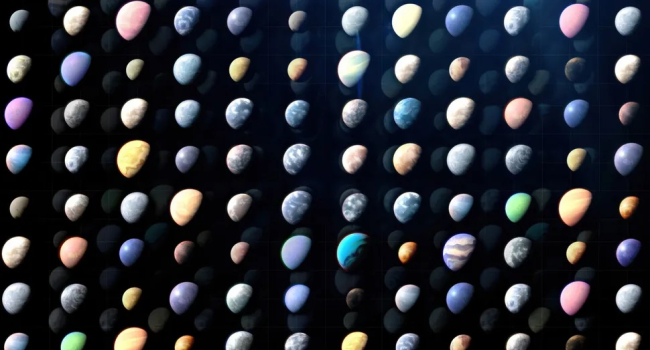
NASA has reached a historic milestone: since 1995, scientists have confirmed the existence of 6,000 exoplanets — worlds beyond the Solar System. Just three years ago, the number was 5,000, and the rapid pace of discovery suggests the potential to identify billions more planets in our galaxy. This was reported by Space.com, citing a NASA statement released on September 17, 2025.
Exoplanets: From the First Discovery to 6,000
The first exoplanet orbiting a Sun-like star — 51 Pegasi b — was discovered on October 6, 1995, by astronomers Michel Mayor and Didier Queloz. This gas giant, 0.64 times the mass of Jupiter, lies 50 light-years from Earth. Although an exoplanet orbiting a pulsar had been found in 1992, 51 Pegasi b became the first “normal” discovery, fundamentally changing humanity’s understanding of space.
By September 2025, NASA’s count reached 6,007 confirmed exoplanets, with no single planet designated as the “6,000th” since confirmations arrive gradually from scientists worldwide. The most recent addition was KMT-2023-BLG-1896L b, a Neptune-like planet with a mass 16.35 times that of Earth. Another 8,000 candidates remain under review, promising even more discoveries.
NASA stated in a video that humanity was entering a new era of exploration, with worlds beyond imagination. The agency emphasized that its goal was to find planets capable of sustaining life and to answer the question of whether we are alone in the universe.
Who Finds Exoplanets and How?
NASA’s telescopes have contributed the most to exoplanet discoveries:
- Kepler (now retired): over 2,600 planets.
- TESS (Transiting Exoplanet Survey Satellite): 693 planets.
These telescopes use the transit method, detecting dips in starlight as planets pass in front of their stars. Other methods, such as radial velocity and gravitational microlensing, also play a key role.
Types of Exoplanets
Among the 6,007 confirmed exoplanets, scientists distinguish several categories:
- 2,035 Neptune-like planets: similar in size to Neptune or Uranus, with hydrogen-helium atmospheres and heavy-element cores.
- 1,984 gas giants: Jupiter-like worlds, often orbiting close to their stars.
- 1,761 super-Earths: larger than Earth but lighter than Neptune; not necessarily habitable.
- 700 Earth-like planets: rocky worlds, potentially similar to Earth.
- 7 unusual planets: unique objects that defy classification, ranging from lava worlds to diamond planets with regenerating atmospheres.
Don Gelino, head of NASA’s Exoplanet Exploration Program at the Jet Propulsion Laboratory, explained that each type of planet provides insights into how planetary systems form, how common Earth-like worlds may be, and where to search for them.
Why It Matters
The discovery of 6,000 exoplanets is more than just a number. Each one represents a unique world — comparable to Jupiter, Earth, or Mars — with its own conditions and history. This knowledge helps scientists:
- Understand how planetary systems form.
- Assess the chances of finding life in the cosmos.
- Search for a “second Earth” — a truly Earth-like planet that has yet to be found.
NASA stressed that the search for a planet resembling our own was ongoing, and although such a world had not yet been discovered, this was only the beginning.
What Comes Next?
The pace of discoveries is accelerating thanks to new missions:
- Gaia (ESA): using astrometry to locate planets.
- Nancy Grace Roman Space Telescope (launch planned for 2026–2027): expected to find thousands of planets via gravitational microlensing.
These tools, together with the James Webb Space Telescope, will aid in the search for biosignatures — signs of life in exoplanet atmospheres.
In Summary
The 6,000-exoplanet milestone shows how far science has come in just 30 years. From the gas giant 51 Pegasi b to the Neptune-like KMT-2023-BLG-1896L b, each discovery brings us closer to answering the question of whether we are alone. With billions of potential planets in the galaxy and new telescopes on the horizon, NASA said it was opening a new chapter of exploration with the central goal of finding a “second Earth.”