make preferable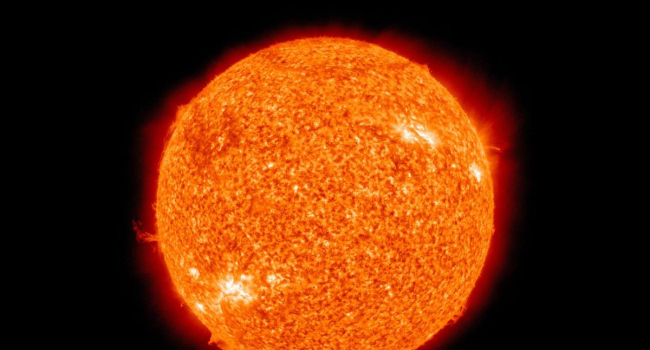
After decades of declining activity, the Sun is becoming increasingly restless. Scientists are recording a rise in sunspots, flares, and coronal mass ejections, marking the end of the downturn that began in the 1980s. New data, published on September 8, 2025, in The Astrophysical Journal Letters, shows that our star is emerging from a “slumber phase” and preparing Earth for a wave of geomagnetic storms.
The Sun Changes Course
Since the 1980s, solar activity had been declining: each 11-year cycle brought fewer spots, flares, and ejections. In 2008, at the start of the 24th solar cycle, activity reached a record low — the weakest ever observed.
“All signs indicated that the Sun was entering a long phase of low activity, similar to the Maunder Minimum of the 17th century,” said James Yasinski, a researcher at NASA’s Jet Propulsion Laboratory.
However, since 2008 the trend has reversed. Research based on missions studying the Sun and the solar wind showed:
- Solar wind speed increased by 6%.
- Solar wind density increased by 26%.
- Solar wind temperature rose by 29%.
- The strength of the interplanetary magnetic field grew by 31%.
These changes reflect an increase in the Sun’s magnetic activity, leading to more geomagnetic storms, which cause auroras but also threaten satellites, space stations, and astronauts.
Historical Parallels: The Maunder Minimum and the “Little Ice Age”
The current rise in activity contrasts with periods of calm in the past. From 1645 to 1715, during the Maunder Minimum, only about 50 sunspots were recorded over 70 years — abnormally low compared to 100–200 per cycle during peaks. Another decline occurred between 1790 and 1830.
Interestingly, the Maunder Minimum coincided with the “Little Ice Age” (about 1300–1850), when the Northern Hemisphere experienced harsh winters and the River Thames in London froze. However, scientists do not directly link the two events: the “Little Ice Age” began earlier and was likely caused by volcanic activity that blocked sunlight. Declines in solar activity, including the recent one (1980–2008), do not significantly affect Earth’s climate, especially compared to global warming driven by human activity.
Why is the Sun “Waking Up”?
The reasons behind changes in solar activity remain a mystery. The 11-year cycle, tied to the Sun’s magnetic field reconfiguration, is well studied, but long-term trends are harder to predict.
“We still don’t understand what drives these changes,” Yasinski noted.
The rise in activity means:
- Auroras: more frequent and brighter, especially at high latitudes.
- Risks for technology: coronal ejections can damage satellites, disrupt communication, and power grids.
- Hazards for astronauts: increased radiation levels in space.
What’s Next?
Scientists expect that the 25th solar cycle (2020–2031) will peak in 2025–2026. This will intensify solar storms, requiring preparation:
- Modernizing satellites to protect them from radiation.
- Improving space weather forecasting systems.
- Studying the effects of the solar wind on Earth’s magnetosphere.
New missions, such as Solar Orbiter and Parker Solar Probe, will continue gathering data to better understand how the Sun affects Earth and space.
In Brief…
The Sun is emerging from a decades-long lull, and since 2008 its activity has been growing: more spots, flares, and ejections. This promises spectacular auroras but also risks for technology and astronauts. The reasons behind the change remain unclear, though scientists compare the situation to the Sun’s recovery from the Maunder Minimum. In the coming years, the 25th solar cycle will reach its peak, and the world must prepare for “space weather.” NASA’s study is a step toward understanding how our star influences life on Earth.