make preferable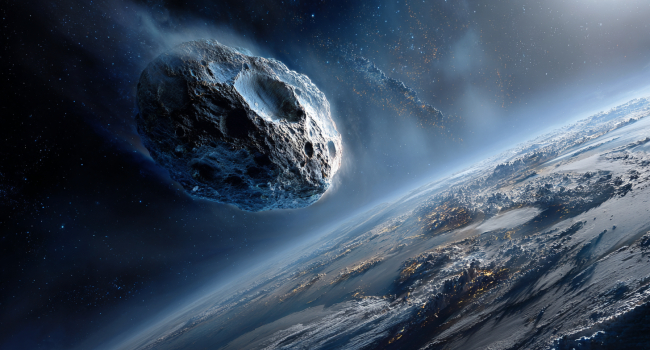
On Thursday, September 18, 2025, Earth will have a close encounter with one of the largest asteroids of the year — 2025 FA22. The object will pass at a distance greater than the diameter of the Moon’s orbit and poses no threat. This was reported by the Solar Astronomy Laboratory of the Space Research Institute (IKI RAS) and the Institute of Solar-Terrestrial Physics (ISTP SB RAS) in their Telegram channels, citing NASA data.
A Close but Safe Flyby
Asteroid 2025 FA22 will approach Earth at about 10:00 Moscow time (07:41 UTC). The minimum distance will be about 842,000 kilometers — just over twice the distance to the Moon. According to scientists, the chances of a collision are “essentially zero.” The object is classified as “potentially hazardous” due to its size, but its orbit is well known and does not intersect with our planet.
The asteroid’s speed is about 24,000 miles per hour (38,600 km/h), and its flyby will be a rare spectacle, visible through a small telescope to residents of Europe and Africa.
Characteristics of the Asteroid
- Size: Diameter estimated between 120 and 280 meters, length up to 290 meters (NASA). This makes it thousands of times more massive than the Chelyabinsk meteor of 2013 (17–20 meters in diameter).
- Mass: About 1,000 times greater than Chelyabinsk, but still not enough for a global catastrophe — even if it struck Earth, it would create a crater up to 2 km wide.
- Discovery: Detected on March 29, 2025, by the Pan-STARRS 2 telescope in Hawaii. Initially, it was thought it might come closer in 2089, but further observations ruled out that risk.
The asteroid belongs to the Apollo group — near-Earth objects with elliptical orbits crossing Earth’s path. It completes one orbit around the Sun in 668 days.
Scientific Interest and Observations
The flyby of 2025 FA22 is not only a spectacle but also an opportunity for scientists. The International Asteroid Warning Network (IAWN) is conducting a study campaign, testing coordination and measurement protocols. Astronomers will determine its orbit, physical properties (texture, composition, albedo), and the polarization of reflected light.
- Observations: The object will reach a magnitude of 2 (visible in amateur telescopes). A live broadcast of the flyby is scheduled for September 18 at 03:00 UTC (06:00 Moscow time) by the Virtual Telescope Project.
- Future flybys: In 2089, the asteroid will approach to 6 million km, and in 2173 to 418,900 km, but without risk.
Such events help refine planetary defense technologies, such as NASA’s DART mission (2022), which altered the orbit of asteroid Dimorphos.
In the Context of Other 2025 Events
In early September, asteroid 2025 QD8 (22 m in diameter, similar to the Chelyabinsk meteor) set a record for closeness, passing at 200,000 km. In May, scientists discovered that Vesta — the largest asteroid in the Solar System — may actually be a fragment of an ancient planet.
In Short…
Asteroid 2025 FA22, one of the largest of 2025, will safely pass Earth on September 18 at a distance of 842,000 km. The object is 1,000 times more massive than the Chelyabinsk meteor but poses no threat. This rare event — occurring only once every 7,500 years — offers a unique opportunity for observations and scientific testing.