make preferable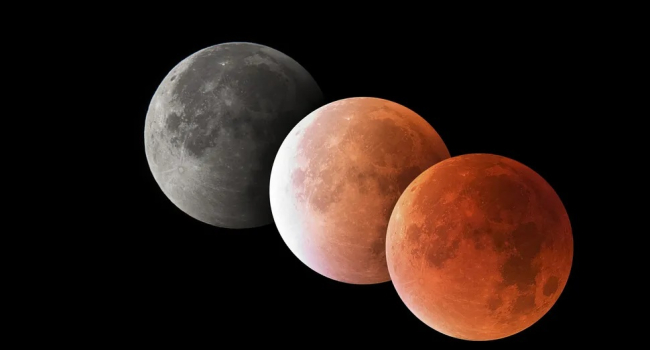
A total lunar eclipse is a breathtaking celestial event when the Moon passes fully into Earth’s shadow and takes on a reddish hue, often called a “blood moon.” But why does the Moon shift from its usual gray to shades of red, orange, or copper? The answer lies in how Earth’s atmosphere bends and filters sunlight.
What Is a Lunar Eclipse?
A lunar eclipse occurs when the full Moon moves through Earth’s shadow, which has two parts:
- Penumbra: the outer, lighter part of the shadow, where the Moon only dims slightly.
- Umbra: the inner, darkest part, where direct sunlight is completely blocked.
There are three types of lunar eclipses:
- Penumbral – the Moon passes through the penumbra, appearing just a bit dimmer. No red color is noticeable.
- Partial – part of the Moon is in the umbra, and that portion may look reddish, though the bright side overshadows the effect.
- Total – the entire Moon is in Earth’s umbra, glowing distinctly red. This phase can last 30 minutes to over an hour.
Why Does the Moon Turn Red?
During a total lunar eclipse, the Moon doesn’t vanish into darkness but glows red due to Rayleigh scattering — the same phenomenon that makes our sky blue.
Sunlight is made of many colors with different wavelengths:
- Short waves (blue and violet) scatter more in the atmosphere.
- Long waves (red and orange) pass through more easily.
When Earth blocks direct sunlight, only light that has traveled through Earth’s thick atmosphere reaches the Moon. It’s as if all the planet’s sunrises and sunsets are projected onto the lunar surface. That filtered light is rich in red and orange tones, which is why the Moon appears red.
What Affects the Shade of Red?
The Moon’s exact color depends on several factors:
- Eclipse geometry: parts of the Moon closer to the center of Earth’s shadow appear darker, while edges look brighter.
- Atmospheric conditions: dust, clouds, mist, or volcanic ash influence how much light gets through. More particles make the Moon look darker red or brown, while clearer air gives it a brighter orange or pink glow.
- Climate events: volcanic eruptions or high pollution levels can intensify the deep red tones.
Why Doesn’t the Moon Turn Black?
If Earth had no atmosphere, the Moon would indeed disappear into pitch blackness when inside the shadow. But Earth’s atmosphere bends and filters light, letting some of it reach the Moon. That scattered, reddish light creates the dramatic “blood moon” effect.
In Short…
A total lunar eclipse transforms the Moon into a glowing red orb thanks to Rayleigh scattering. Earth’s atmosphere filters sunlight, allowing mostly red and orange wavelengths to illuminate the Moon. The exact hue depends on eclipse geometry and atmospheric conditions — from clean skies to volcanic dust. This natural phenomenon, lasting from half an hour to over an hour, is not only visually stunning but also a reminder of the interplay between sunlight, our atmosphere, and cosmic mechanics.