make preferable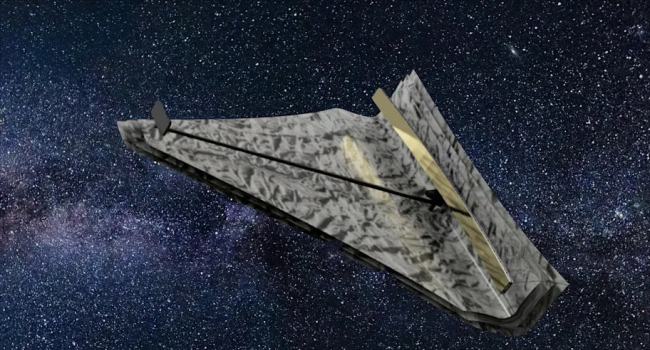
A new study proposes a revolutionary approach to the search for Earth-like exoplanets: instead of using a traditional circular telescope mirror, use a rectangular one. This design could become a decisive factor in detecting Earth-like planets in the habitable zones of Sun-like stars. The findings were published on September 1, 2025, in Frontiers in Astronomy and Space Sciences.
Why a New Telescope is Needed
The search for potentially habitable, Earth-sized planets is one of modern astronomy’s top goals. According to the U.S. National Academies of Sciences, a new space telescope capable of directly imaging Earth-sized planets in the habitable zones of Sun-like stars ranks first in their decadal priorities for astronomy and astrophysics. Such a telescope would need an aperture of at least 8 meters—1.5 meters larger than the James Webb Space Telescope (JWST), currently the largest space-based observatory.
But astrophysics professor Heidi Newberg of Rensselaer Polytechnic Institute suggests an alternative: a telescope with a rectangular mirror measuring 20 meters by 1 meter (65.6 by 3.3 feet), operating in the infrared at a wavelength of about 10 microns—the same range JWST uses to detect water vapor in exoplanet atmospheres.
Why Infrared and Water Vapor?
Water vapor is a key marker of potential habitability, as it indicates the possible presence of liquid water. JWST’s MIRI (Mid-Infrared Instrument) has already confirmed water vapor in the atmospheres of large, hot exoplanets. Observing at 10 microns (about the width of a human hair) provides another advantage: the contrast between a planet and its star is more favorable in infrared. While in visible light a planet is about a billion times dimmer than its star, at 10 microns it is only a million times dimmer, making detection more feasible.
Problems with Traditional Telescopes
Directly imaging an Earth-like planet in the habitable zone of a star around 30 light-years away requires an aperture of about 20 meters, based on the Rayleigh criterion (angular resolution = wavelength ÷ diameter × 1.22). Building a 20-meter circular mirror is both an engineering and financial challenge. Such a mirror would need to fold multiple times to fit inside a rocket, making the design complex and costly.
An alternative is an optical interferometer—combining many smaller telescopes to simulate one large mirror. However, this requires extremely precise alignment, which is technologically difficult and expensive.
Rectangular Telescope: Simplicity and Efficiency
Newberg’s team proposes a rectangular 20 m × 1 m mirror. Such a telescope:
- Has a smaller light-collecting area (20 m²) than JWST (25.4 m²), lowering costs.
- Can maximize planet detection efficiency by aligning its long side with the planet-star axis.
- Can rotate to adapt to different star-planet orientations.
This design is simpler and cheaper than a massive circular mirror or an interferometer, while still achieving the needed resolution to detect Earth-like planets.
Discovery Potential
Within 32.6 light-years (10 parsecs) of our Solar System lie 69 Sun-like stars (spectral classes K, G, F) and about 300 cooler M-type stars (red dwarfs). The rectangular telescope could survey these systems and, according to Newberg, detect about 30 Earth-like planets within three years, assuming one such planet per Sun-like star on average.
“We show that this design could, in principle, detect half of all existing Earth-like planets orbiting Sun-like stars within 30 light-years in under three years,” Newberg writes.
In Brief
A rectangular telescope could be the key to finding Earth 2.0—planets capable of sustaining life. Its innovative design balances simplicity, affordability, and effectiveness, observing at 10 microns in the infrared where detecting water vapor in exoplanet atmospheres is easier. Unlike bulky circular mirrors or complex interferometers, the rectangular telescope offers a practical solution for the next generation of space observatories. If realized, it could dramatically speed up the search for habitable worlds, bringing us closer to answering the question: are we alone in the universe?