make preferable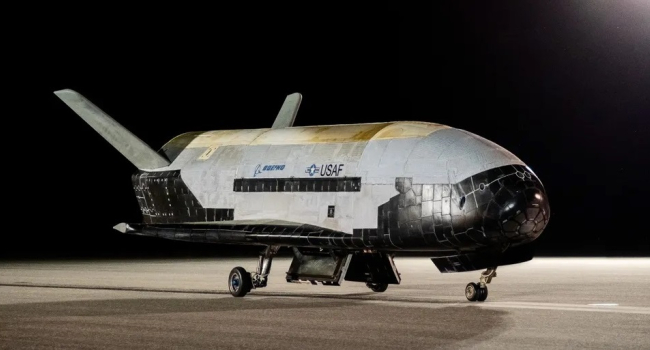
The eighth mission of the American military spaceplane X-37B, scheduled for August 21, 2025, promises to be a turning point in the development of navigation technologies. One of its key experiments will be the testing of a quantum inertial sensor — a potential replacement for GPS that could radically transform navigation for spacecraft, aircraft, ships, and submarines. This was reported by Samuel Lellouche, Associate Professor at the University of Birmingham specializing in quantum technologies.
Why isn’t GPS always enough?
As space.com explains, satellite systems such as GPS have become an integral part of our lives — from smartphones to aviation and logistics. But GPS has its limitations: its signals weaken or vanish entirely beyond Earth’s orbit, underwater, or in the presence of interference such as jamming or spoofing, a growing concern in conflict zones. This makes the development of autonomous navigation systems a critical challenge.
Traditional inertial navigation systems (INS), which use accelerometers and gyroscopes, can track an object’s movement without external signals. However, small errors accumulate over time, leading to significant deviations in positioning. To correct them, GPS or other external sources are required.
A quantum revolution in navigation
The quantum inertial sensor to be tested on X-37B uses the principles of quantum mechanics to achieve unprecedented precision. At the core of the technology is atomic interferometry:
- Atoms are cooled to temperatures near absolute zero so they begin to behave like waves.
- With the help of high-precision lasers, atoms are placed into a state of superposition (similar to Schrödinger’s famous cat), in which they move along two trajectories at once.
- These trajectories are then recombined, creating an interference pattern, much like intersecting waves on water. This pattern carries information about the slightest changes in motion, such as acceleration or rotation.
Compared to classical INS, quantum sensors provide orders of magnitude greater sensitivity. Because atoms are identical and not subject to wear, unlike mechanical components, such systems are virtually immune to drift and can ensure highly accurate navigation without external signals.
The uniqueness of the X-37B mission
The upcoming mission will mark the first test of quantum inertial navigation of this scale in space. Previously, similar technologies had been tested in orbital or suborbital experiments, such as NASA’s Cold Atom Laboratory and Germany’s MAIUS-1 mission, but those focused on studying the physics of atomic interferometry rather than practical navigation applications.
The X-37B experiment, by contrast, involves a compact, high-performance navigation unit designed for long-term operational missions. This moves quantum technology from the realm of fundamental science into practical application for the aerospace industry.
Significance for space and beyond
Quantum navigation holds enormous potential for both military and civilian use:
- For space: The technology will provide reliable navigation in deep space, on the Moon, or on Mars, where GPS is unavailable. It could become not just a backup but the main system for autonomous missions.
- For the military: Quantum sensors will enhance navigation resilience in GPS-denied environments, such as in conflict zones where signals are jammed.
- For civilian applications: The technology could be used by aircraft, ships, and submarines, where GPS may be unavailable or unreliable.
Global context and outlook
Quantum inertial navigation is being actively developed in the United States, China, and the United Kingdom. In 2024, Boeing and AOSense conducted the world’s first flight test of quantum navigation on a piloted aircraft, achieving four hours of GPS-independent navigation. That same year, the UK carried out a similar test on a commercial airplane. The X-37B mission will take these advances into orbit, potentially marking a historic milestone in space navigation.
In summary
The test of the quantum inertial sensor aboard X-37B, scheduled for August 21, 2025, promises to be a major step forward in the development of autonomous navigation systems. This technology could radically change navigation both in space and on Earth, ensuring resilience and precision in environments where GPS is unavailable. Although the military nature of the mission may limit the public release of results, its success would represent a true “quantum leap” in aerospace technology, opening new horizons for research and space exploration.