make preferable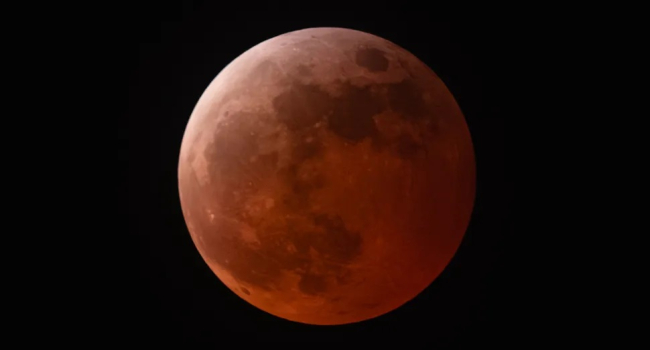
In just a week, on the night of September 7–8, 2025, people around the world will be able to witness a breathtaking astronomical event — a total lunar eclipse, also known as a blood moon. Earth’s shadow will cover the Moon, giving it a reddish hue. This will be one of the most spectacular celestial shows of the year, and now is the perfect time to prepare for observation.
How does a lunar eclipse occur?
A total lunar eclipse happens when Earth passes between the Sun and the Moon, casting its shadow onto the lunar surface. Because of the tilt of the Moon’s orbit, these events don’t occur every month but roughly three times a year, when the Sun, Earth, and Moon align perfectly. During the total phase of the eclipse, the Moon plunges into the darkest part of Earth’s shadow — the umbra — taking on a distinctive red color.
This effect occurs due to Rayleigh scattering: Earth’s atmosphere scatters short blue wavelengths of light, while allowing longer red wavelengths to pass through, which then bathe the Moon in a blood-red glow.
When and where to watch
The eclipse will begin on September 7 at 15:28 GMT (18:28 Moscow time), with totality lasting from 17:30 GMT (20:30 MSK) for 82 minutes. All phases of the eclipse occur simultaneously for observers worldwide, but visibility depends on the Moon’s position above the horizon.
About 5.8 billion people (76% of Earth’s population) in Australia, Asia, Africa, and Eastern Europe will be able to see the total eclipse. In countries such as the UK, Spain, and Brazil, only certain phases will be visible, while in the Americas, the Moon will be below the horizon, making observation impossible.
If weather conditions or the Moon’s position prevent direct viewing, you can follow the event online: Space.com will host a live broadcast (details will be published closer to the date). The site’s Moon blog will also provide updates and photos of the eclipse phases.
How to prepare for observation
The week leading up to the eclipse is the ideal time to prepare:
- Choose a viewing spot: Find a location with a clear view of the Moon, unobstructed by tall buildings or trees. Photographers can plan shots with the Moon framed against iconic landmarks.
- Use optics or watch with the naked eye: Unlike a solar eclipse, a lunar eclipse is safe to observe without protection. You can use a telescope, binoculars, or simply look up at the sky.
- Photography tips: A DSLR camera works best for capturing the blood moon. Review astrophotography guides and check out recommendations for the best cameras and lenses of 2025 to ensure high-quality shots.
What to expect
During totality, the Moon will take on a deep red hue, creating a mesmerizing spectacle. With totality lasting 82 minutes, observers will have plenty of time to enjoy the view. Those in Eastern Europe, including Russia, will be especially well-positioned to see the eclipse in the evening hours, provided the skies are clear.
In summary
The total lunar eclipse of September 7–8, 2025 — the blood moon — will be one of the year’s most significant astronomical events. It will give billions of people the chance to see the Moon in an extraordinary red glow, caused by the scattering of sunlight in Earth’s atmosphere. Prepare in advance by choosing the perfect spot to observe, or follow the live stream if the weather is unfavorable. This spectacle will be a reminder of the grandeur of space and its accessibility to anyone who simply looks up at the night sky.