make preferable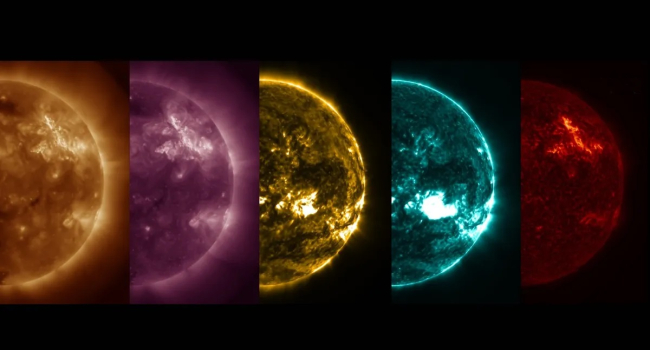
NASA and IBM have introduced a groundbreaking artificial intelligence model called Surya (named after the Sanskrit word for “sun”), which promises to transform the way space weather is forecast. Trained on nine years of data from NASA’s Solar Dynamics Observatory (SDO), the model can predict solar flares, solar wind speeds, and the emergence of active regions on the Sun, according to space.com.
How does Surya work?
Surya is based on a massive dataset of solar images collected by SDO, which has been orbiting Earth at an altitude of 35,800 km for more than 15 years, monitoring solar activity. The model processes these data, uncovering hidden patterns that help forecast:
- Solar flares — powerful radiation bursts capable of disrupting radio communications on Earth.
- Solar wind speeds — streams of charged particles that influence space weather.
- Active regions — areas on the Sun where flares and coronal mass ejections (CMEs) originate.
Unlike traditional methods, Surya uses AI to analyze image datasets that are ten times larger than standard training sets. This allows it to predict events with high accuracy up to two hours in advance. In early tests, Surya improved solar flare prediction accuracy by 16% compared to existing methods. For the first time, scientists were able to forecast not just the occurrence of a flare, but also its exact location on the solar surface.
“By creating a foundation model trained on NASA’s heliophysics data, we are simplifying the analysis of the Sun’s complex behavior with unprecedented speed and accuracy,” said Kevin Murphy, Chief Data Scientist at NASA.
Why does this matter?
Solar flares and CMEs can trigger geomagnetic storms that:
- Disrupt satellites, potentially knocking them out of orbit or damaging their electronics.
- Cause power grid failures and widespread blackouts.
- Distort GPS signals, making navigation unreliable.
- Interfere with aviation and maritime radio communications.
According to insurance firm Lloyds, space weather impacts could cost the global economy up to $2.4 trillion over five years, while a single powerful solar storm might cause $17 billion in damages. Timely and accurate forecasts from Surya allow operators of critical infrastructure—such as power grids, satellites, and aviation—to prepare for potential threats.
“Just as we prepare for hazardous weather on Earth, we must also prepare for solar storms. Surya gives us a unique ability to anticipate what will happen. This is not only a technological breakthrough but also an important step in protecting our civilization from the star that sustains us,” said Juan Bernabé-Moreno, Director of IBM Research Europe in the UK and Ireland.
Open access for science
NASA and IBM have made Surya available to the global research community via Hugging Face, as well as through GitHub and the IBM TerraTorch library. Alongside the model, they released the SuryaBench dataset, designed to support the development and testing of space weather forecasting applications. This opens new opportunities for solar physicists and space weather experts to build tailored tools and applications.
Surya is part of a broader NASA–IBM collaboration focused on using AI to study Earth and the Solar System. Previously, the two organizations developed the Prithvi family of models for climate and geospatial research.
Outlook and challenges
Researchers hope that future space missions observing the Sun from different vantage points will complement SDO’s data and enhance prediction accuracy even further. For now, Surya represents the most promising tool for accelerating preparedness for space weather. However, limitations remain: the model cannot directly observe the magnetic field between Earth and the Sun, which affects the precision of storm impact assessments.
In short…
Surya is a breakthrough in space weather forecasting, merging advanced AI with NASA’s rich solar data archive. The model not only improves flare prediction accuracy by 16% but also, for the first time, pinpoints their locations in advance. Its open accessibility via Hugging Face makes it a powerful tool for the global scientific community. At a time when humanity’s dependence on technology sensitive to space weather is growing, Surya marks a critical step in safeguarding infrastructure and deepening our understanding of our star.