make preferable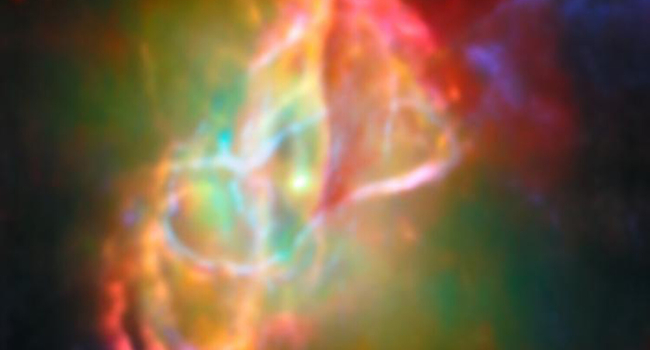
Astronomers, using the James Webb Space Telescope, have uncovered new clues about the formation of Earth-like planets by studying the Butterfly Nebula (NGC 6302). The findings, published in the Monthly Notices of the Royal Astronomical Society (MNRAS), highlight unique features of cosmic dust that may hold the key to the origins of new worlds.
The Mysterious Butterfly Nebula
Located 3,400 light-years from Earth in the constellation Scorpius, NGC 6302 earned its name due to its wing-like shape. This planetary nebula formed when a star between 0.8 and 8 solar masses expelled its outer layers at the end of its life cycle. At its core lies one of the hottest stars in the Milky Way, with a temperature of 220,000 Kelvin, which illuminates the surrounding gas, producing a mesmerizing glow. A dense dust belt, or “torus,” forms the “body” of the butterfly, blocking much of the star’s light.
Dust — The Building Blocks of Planets
Scientists focused on the nebula’s central dust, which consists of tiny mineral and organic particles, some linked to the origin of life. Webb’s powerful instruments revealed:
- Crystalline silicates, such as quartz, resembling microscopic gemstones formed under calm conditions.
- Amorphous dust grains, created in turbulent gas flows.
- Polycyclic aromatic hydrocarbons (PAHs) — carbon-based molecules also found in car exhaust and smoke on Earth. Strikingly, PAHs were detected in the nebula’s oxygen-rich environment, possibly the first such observation.
The dust grains measure just millionths of a meter across, suggesting growth over centuries. Researchers also detected nearly 200 spectral lines from different atoms and molecules, pointing to the nebula’s complex composition.
The Role of the Central Star
Infrared imaging by Webb allowed astronomers to pinpoint the hidden central star for the first time, previously obscured by dust. The star heats its surrounding material, making the dust glow in infrared wavelengths. This dust bubble shapes the nebula, channeling gas outflows in opposite directions, forming the butterfly’s distinctive “wings.”
“We are seeing both orderly crystals and chaotic particles in a single object for the first time. This is a major step toward understanding how planetary foundations are built,” said Dr. Mikako Matsuura of Cardiff University, lead author of the study.
Why It Matters
The Butterfly Nebula serves as a natural laboratory for exploring processes that occurred billions of years ago during the birth of planets, including Earth. The cosmic dust in NGC 6302 represents raw material for future worlds. Its makeup and evolution shed light on how stellar matter transforms into planets and potentially life-bearing environments.
In Short…
Webb’s study of the Butterfly Nebula has expanded our understanding of planetary formation. Scientists identified complex dust containing crystalline silicates and carbon molecules, while also locating the nebula’s hidden central star, which sculpts its unique structure. These findings bring us closer to solving the mystery of how worlds like our own emerge from cosmic chaos. NGC 6302 continues to inspire astronomers, reminding us of the beauty and complexity of the universe.