make preferable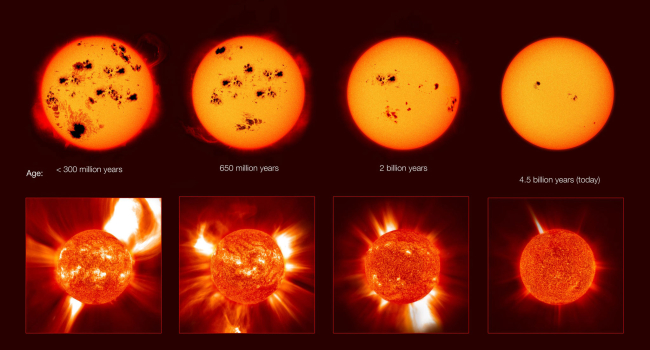
The Solar Astronomy Laboratory of the Space Research Institute (IKI) of the Russian Academy of Sciences reported unusual activity on the Sun. Within the past day, at least 100 new sunspots emerged in active region No. 4197, which scientists described as “some kind of hell.” The announcement was made on the laboratory’s Telegram channel.
What happened?
In region No. 4197, one of the main zones of solar activity, more than a hundred new spots were recorded within 24 hours. Sunspots are areas of increased magnetic activity that are typically accompanied by flares and plasma ejections. However, despite such an intense formation of spots, no flares were registered in this zone, leaving scientists puzzled. “Where all this energy is going is completely unclear,” the researchers noted.
Contradictory signals
According to IKI RAS, the solar activity forecast for the next day remains uncertain due to contradictory signals. On the one hand, the Sun still holds a large number of major spots, indicating significant reserves of energy capable of triggering powerful flares. On the other hand, the frequency of flares has decreased over the past 24 hours. For example, on August 26, the Institute of Applied Geophysics reported four flares in one day, but in region No. 4197 activity turned out to be unexpectedly low.
Why does this matter?
Sunspots and solar flares directly affect space weather, which in turn can impact Earth. Flares can cause geomagnetic storms that disrupt satellites, power grids, and even influence human well-being. The abnormal activity in region No. 4197, where energy accumulates but is not released in the form of flares, makes the Sun’s behavior unpredictable. Scientists continue to monitor this region to determine whether the activity will lead to powerful ejections in the near future or if the star will “cool down.”
In short…
The appearance of more than 100 new sunspots in just one day in active region No. 4197 is an unusual phenomenon that raises new questions for scientists. The absence of flares amid such high activity makes the Sun’s behavior mysterious. Researchers at IKI RAS continue to analyze the data to forecast potential consequences for Earth. This serves as a reminder of just how complex and unpredictable our star can be, even under close observation.