make preferable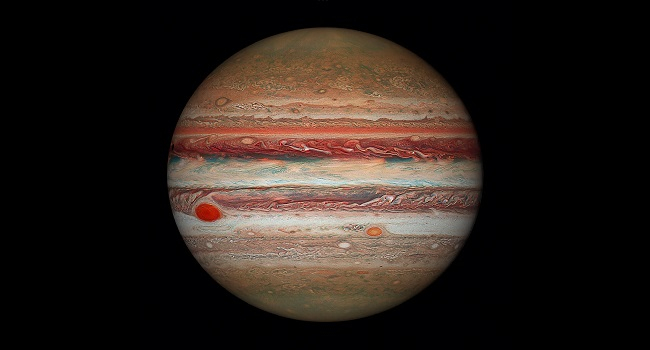
Physicists from Nagoya University (Japan) and the Italian National Institute for Astrophysics have, for the first time, demonstrated that the birth of Jupiter triggered the formation of chondrules—microscopic spheres of molten material found in meteorites. The study, published in Scientific Reports on August 26, 2025, explains how the gravity of the forming Jupiter influenced the early Solar System and left traces in the form of these unique particles.
What Are Chondrules?
Chondrules are tiny spherical particles, ranging from 0.1 to 2 millimeters in diameter, that formed more than 4.5 billion years ago. They are contained within asteroids and comets and reach Earth as components of meteorites. Despite decades of research, the mechanism behind their formation remained a mystery. Chondrules are often called “time capsules” because they preserve the conditions of the early Solar System.
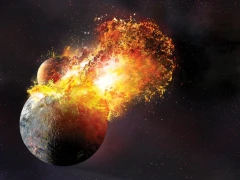
“When planetesimals collided at enormous speeds, the water within their rocks instantly turned into vapor. The vapor expanded like a miniature explosion, tearing molten rock into microscopic droplets,” explained Professor Shinichi Sirono of Nagoya University. These droplets cooled and solidified into the chondrules we find today.
The Role of Jupiter
The researchers modeled the growth of Jupiter, the largest planet in the Solar System, and its influence on surrounding celestial bodies. Their simulations showed that the gravity of the forming Jupiter caused high-speed collisions between planetesimals—small, water-rich protoplanetary bodies. During these collisions, water evaporated, creating an explosion-like expansion that shattered molten rock into chondrules.
The model confirmed that the characteristics of chondrules, such as their size and structure, match those observed in meteorites. Their peak formation occurred around 1.8 million years after the birth of the Solar System, when Jupiter reached its enormous size.
Chondrules as “Time Markers”
Chondrules serve as markers that record stages of planetary formation. The variety of their ages, discovered in meteorites, indicates that such processes occurred not only during the birth of Jupiter but also during the formation of other gas giants, such as Saturn. This makes chondrules a valuable tool for dating events in the early Solar System.
“Chondrules can be considered as ‘time markers’ that record stages of planetary formation,” the scientists noted.
Scientific Significance
The study provides new insights into the evolution of the Solar System:
- Dating planetary formation: Chondrules allow scientists to refine the chronology of Jupiter’s growth and that of other planets.
- Understanding the early Solar System: Collisions of planetesimals under Jupiter’s gravitational influence show how asteroids and other bodies formed.
- Exoplanets: Similar processes likely occur in other star systems, helping to explain the formation of exoplanets.
“According to the researchers, their work provides a new way to date the birth of planets and helps us understand how the Solar System evolved,” the study states. The discovery also highlights the link between planetary formation and the composition of meteorites, which act as an archive of cosmic history.
In Brief…
A new study published in Scientific Reports reveals that the formation of Jupiter around 4.5 billion years ago triggered the creation of chondrules—tiny particles in meteorites formed during collisions of water-bearing planetesimals. Simulations showed that Jupiter’s gravity initiated these processes, and chondrules became “time markers” of planetary growth. The discovery not only explains the mystery of their origin but also sheds light on the evolution of the Solar System and exoplanetary systems, emphasizing their dynamic and complex nature.