make preferable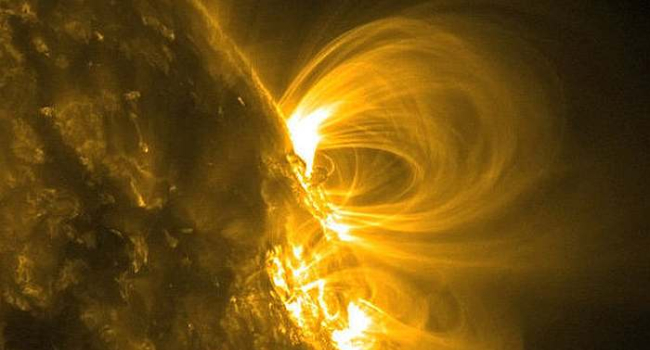
Specialists from the Laboratory of Solar Astronomy at the Space Research Institute of the Russian Academy of Sciences (IKI RAS) have reported that the likelihood of X-class solar flares — the most powerful and dangerous — has reached its highest level since mid-summer 2025. These events can trigger severe geomagnetic storms, posing threats to satellites, communication systems, and increasing radiation levels in space. The findings were published in the laboratory’s report on August 26, 2025.
What are X-Class Flares?
X-class flares are the most powerful solar eruptions, accompanied by enormous releases of energy and radiation. They are capable of:
- Causing geomagnetic storms that disrupt satellites and power grids.
- Creating interference in radio communications, especially in the high-frequency range.
- Increasing radiation levels in space, which is dangerous for astronauts and spacecraft.
- Intensifying auroras, making them visible at lower latitudes.
“Such events can trigger strong geomagnetic storms on Earth, disable satellites and communication systems, and increase radiation levels in space,” noted IKI RAS scientists.
Source of the Activity
According to researchers, the current activity peak is linked to a large group of sunspots located just beyond the visible edge of the Sun. This region is the source of powerful eruptions, including an M4.6 flare recorded on August 25. Scientists warn that in the coming days, this group may rotate into Earth’s view, raising the risk of direct impact.
“The strongest eruptions are originating from this region, which increases the probability of extreme flares,” the laboratory explained.
Recent Prominence
On August 20, 2025, the Sun released one of the largest prominences in recent years. This massive cloud of plasma, recorded near the star’s southern pole, at one point exceeded the size of the Sun itself. Fortunately, preliminary calculations showed its trajectory bypassed Earth, avoiding significant geomagnetic effects.
“The ejected mass at one point exceeded the size of the star,” emphasized IKI RAS.
Solar Activity Context
The Sun is currently at the peak of its 11-year cycle, marked by an increase in sunspots and flares. The recent M4.6 flare, the strongest in two months, confirms the star’s heightened activity. However, X-class flares, which are an order of magnitude more powerful, pose a far greater threat. Scientists continue to monitor the movement of active regions to assess potential risks.
Why It Matters
X-class flares can cause serious damage to modern infrastructure. For example, a Carrington Event-scale eruption like that of 1859, which disrupted telegraph systems, today could disable satellites, cause power outages, and create problems with GPS navigation. While enhanced auroras may appear spectacular, they are only a side effect of such storms.
“The fact that active regions retain enough energy to produce the strongest eruptions in months is concerning,” the researchers stressed.
In Brief
The probability of X-class solar flares has reached its highest point since mid-summer 2025, according to IKI RAS scientists. A large group of sunspots, currently hidden behind the Sun’s edge, may soon rotate toward Earth, raising the risk of geomagnetic storms. The recent giant prominence on August 20 missed our planet, but the Sun’s current activity requires close monitoring. Observations continue to ensure timely warnings about potential threats to technology and space operations.