make preferable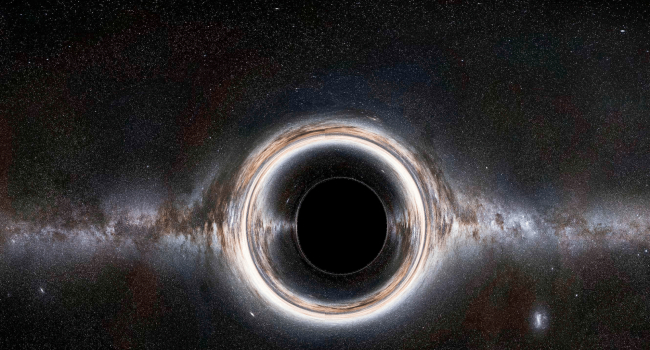
An international team of scientists participating in the Dark Energy Spectroscopic Instrument (DESI) mission has proposed a revolutionary theory: black holes may be the source of dark energy — the mysterious force responsible for the accelerated expansion of the Universe. The study, published in Physical Review Letters (PRL) on August 21, 2025, is based on DESI data and observations of the cosmic microwave background, opening new horizons in our understanding of the cosmos.
Black Holes and Dark Energy
Dark energy, which makes up about 70% of the Universe’s energy, was long considered a constant value. However, recent DESI measurements showed that its influence on cosmic expansion evolves over time. The new hypothesis, known as the model of Cosmologically Coupled Black Holes (CCBH), offers an explanation: black holes formed from the collapse of massive stars may transform ordinary matter (baryonic matter) into dark energy.
“When stars collapse into black holes, a process is triggered that gradually converts infalling matter into dark energy. This transformation proceeds in step with star formation rates and allows the model to naturally align with both early and late cosmic observations,” the study authors explained.
According to the CCBH model, black holes are not “spaghettifying” singularities but “bubbles” of dark energy stabilized within the Schwarzschild radius. This enables them to interact with the expanding Universe, increasing the density of dark energy over time.
Solving the Neutrino Paradox
One of the key achievements of the new model is resolving the problem of neutrino mass — the “ghostly” particles that are the second most abundant in the Universe after photons. Previous interpretations of DESI data within the standard cosmological model pointed to a “negative” neutrino mass, which is physically impossible. The CCBH model solves this paradox by showing that the conversion of baryonic matter into dark energy reduces the total matter content in the late Universe, leaving room for a positive neutrino mass consistent with terrestrial experiments.
“You find that the probability distribution for neutrino mass not only points to a positive value, but to a number fully consistent with ground-based experiments,” noted study co-author Rogier Windhorst of Arizona State University.
How Does It Work?
The CCBH model links the production of dark energy to the process of star formation, as measured by the Hubble and James Webb telescopes. When massive stars collapse into black holes, their matter is converted into dark energy, accelerating cosmic expansion. This process explains why the density of dark energy, according to DESI, increases over time, and it also resolves discrepancies in measurements of the expansion rate of the Universe (the Hubble constant).
“The CCBH model quantitatively connects phenomena that at first glance should not be related. This blending of scales, the very large and the very small, defies our usual linear intuition,” said co-author Duncan Farrah of the University of Hawai‘i.
Confirming the Hypothesis
DESI data, collected using 5,000 robotic “eyes” on the Mayall Telescope at Kitt Peak Observatory (Arizona), enabled scientists to build precise maps of millions of galaxies spanning billions of years of cosmic history. These maps showed that the density of dark energy increases in sync with the growth in the number of black holes, supporting the CCBH hypothesis.
Previously, the model had already received support through observations of the growth of supermassive black holes in galactic centers, which also showed a connection with dark energy. Researchers emphasize that further observations and stricter tests are required for final confirmation of the theory.
Why Does It Matter?
If the CCBH hypothesis is confirmed, it will radically change our understanding of the Universe’s evolution. Dark energy, instead of being a static “constant,” would turn out to be a dynamic process tied to the life cycles of stars and black holes. This also opens new perspectives for studying exoplanets and galaxies, since black holes may play a key role in cosmic dynamics.
“Fundamentally, the question of whether black holes are a source of dark energy linked to the expansion of the Universe has ceased to be purely theoretical. It is now an experimental question,” emphasized study co-author Gregory Tarle of the University of Michigan.
In Brief…
A new hypothesis proposed by the DESI team suggests that black holes formed from stellar collapse convert matter into dark energy, driving the accelerated expansion of the Universe. The CCBH model, published in Physical Review Letters, explains the evolution of dark energy and resolves the neutrino mass paradox, restoring it to a positive range. Confirmed by DESI data and observations of star formation, this theory may overturn cosmology by showing that black holes are not just destroyers but key “engines” of the Universe. Scientists continue gathering data to test a hypothesis that promises to change our understanding of the cosmos.