make preferable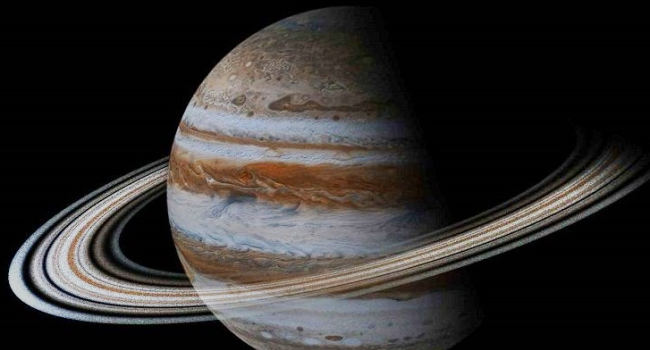
Scientists from Durham University (UK), in collaboration with NASA, the SETI Institute, and the University of Oslo, have disproved the theory that Jupiter’s “diluted” core was formed by a giant collision with a protoplanet. The study, published in the Monthly Notices of the Royal Astronomical Society (MNRAS) on August 22, 2025, shows that the planet’s unique core structure emerged during its gradual formation, rather than as a result of a catastrophic impact.
The Puzzle of the “Diluted” Core
Jupiter, the largest planet in the Solar System, has an unusual core: instead of a sharp boundary separating it from the surrounding hydrogen and helium layers, the transition is gradual. This phenomenon, called a dilute core, was discovered by NASA’s Juno probe, which has been studying the planet’s internal structure since 2016.
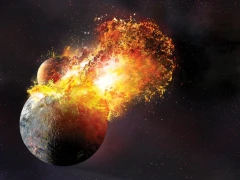
Previously, scientists assumed that the “diluted” core might have formed after a massive collision with a protoplanet, estimated to have had about half the mass of Jupiter’s core. Such an impact, according to the hypothesis, would have mixed the inner layers, making the core less dense and more diffuse.
Supercomputer Simulations
To test this theory, the researchers carried out a series of supercomputer simulations on the DiRAC COSMA facility in Durham, using the SWIFT software and a new technique for modeling material mixing. They explored various collision scenarios, including extreme impact parameters.
“We see that such impacts indeed ‘shake’ the planet to its very center, but not in the way required to explain Jupiter’s current structure,” noted lead author Dr. Thomas Sandnes.
The results showed that even after powerful collisions, displaced rocky and icy materials quickly settled back down, restoring a distinct boundary between the core and the outer layers. None of the simulations resulted in a stable diluted core, effectively disproving the catastrophic impact hypothesis.
An Alternative Explanation
The scientists concluded that Jupiter’s core structure formed gradually during the planet’s growth. As it accumulated mass, heavy elements (such as iron and silicates) and light ones (hydrogen and helium) were incorporated unevenly, creating a diffuse boundary. This evolutionary scenario is supported by similar findings about Saturn’s internal structure.
“Jupiter’s core acquired its properties not because of a single cataclysm, but gradually—during the planet’s growth, as heavy and light elements were drawn into its interior differently,” explained Sandnes.
Why It Matters
The discovery reshapes our understanding of how gas giants form, with implications reaching beyond Jupiter. Similar diluted cores may be a common feature of other giant planets, including the many Jupiter- and Saturn-sized exoplanets discovered in distant star systems. This opens new opportunities for exploring their internal structures and evolution.
In addition, the research highlights the importance of the Juno mission, which provided the crucial data allowing scientists to reassess long-standing theories. Comparable missions to other gas giants, such as Saturn, could uncover more details about their formation.
In Short…
Scientists have disproved the hypothesis that Jupiter’s diluted core formed from a collision with a protoplanet. Supercomputer simulations revealed that even massive impacts could not have produced the observed structure. Instead, the core developed gradually during the planet’s growth, a conclusion supported by similar evidence from Saturn. The study, published in MNRAS, not only helps solve one of Jupiter’s biggest mysteries but also advances our understanding of the formation of gas giants and exoplanets across the galaxy.