make preferable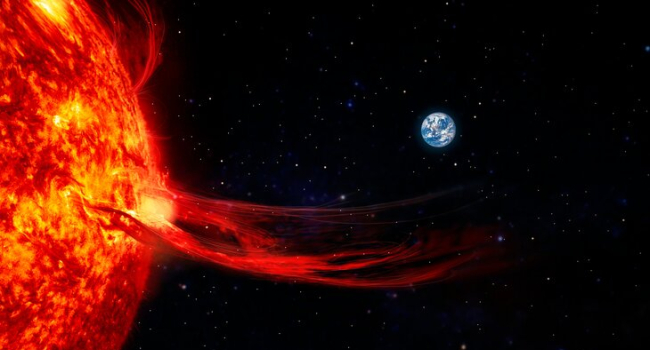
Astronomers from the Solar Astronomy Laboratory of the Space Research Institute of the Russian Academy of Sciences (RAS) and the Institute of Solar-Terrestrial Physics of the Siberian Branch of RAS reported the most powerful solar flare in the past two months. The M4.6-level event occurred on August 25, 2025, at 08:24 Moscow time and was classified as Category Four on a five-point scale. This was announced on the laboratory’s website.
Flare Details
The M4.6 flare, recorded on the morning of August 25, became the strongest since June 20, 2025. It originated in an active region of the Sun that is not yet directly facing Earth. However, scientists warn that within the next 24 hours, the position of these zones may shift, increasing the likelihood of impact on our planet.
“The first peripheral effects from the plasma ejection are expected on the evening of August 25, with the main influence in the second half of August 26,” the researchers noted.
According to the laboratory, the flare was accompanied by a coronal mass ejection, which may trigger geomagnetic disturbances on Earth. Such events can affect satellites, communication systems, and power grids, as well as intensify auroras.
Recent Prominence
Shortly before this, on August 20, the Sun released one of the largest prominences in recent years. This massive plasma cloud, recorded near the star’s southern pole, at one point exceeded the size of the Sun itself. Preliminary estimates suggest that its trajectory bypassed Earth, causing no significant geomagnetic consequences.
“The ejected mass at one point exceeded the size of the star,” the solar astronomy laboratory stated.
Why Is This Important?
M-class solar flares are powerful, though not the most extreme (X-class events are the strongest). However, even an M4.6 flare can produce significant effects, especially if the Sun’s active region is directed toward Earth. During such periods, the risks increase for:
- Geomagnetic storms affecting satellites and power systems.
- Enhanced auroras visible at lower latitudes.
- Radio communication disruptions, particularly in the high-frequency range.
Scientists note that in the coming days, active solar regions will move closer to facing Earth, which could raise the likelihood of geomagnetic disturbances. “The very fact that active centers retain enough energy to generate the strongest explosions in several months is concerning,” astronomers emphasized.
Solar Activity Context
The Sun is currently at the peak of its 11-year activity cycle, marked by an increase in sunspots and flares. Despite this, our star remains relatively calm compared to other stars of the same type, which scientists believe may be linked to the gravitational influence of Solar System planets such as Venus, Earth, and Jupiter.
In Brief…
The M4.6-level flare recorded on August 25, 2025, was the most powerful in two months, highlighting the Sun’s heightened activity at the peak of its cycle. While the active regions are not yet directly Earth-facing, scientists expect possible geomagnetic effects between August 25 and 26. The giant prominence of August 20 fortunately bypassed our planet. Researchers continue to monitor solar activity to provide timely warnings about potential risks to technology and infrastructure.