make preferable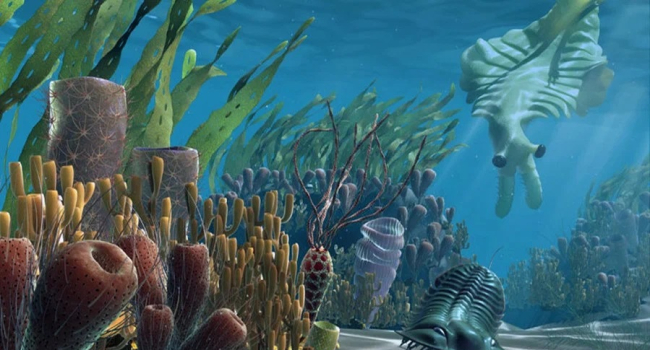
Biologists John Wiens of the University of Arizona and Daniel Moen of the University of California, Riverside have uncovered a key mechanism of evolution, showing that more than 80% of species on Earth emerged through rapid “explosions” of biodiversity. Their study, published in Frontiers in Ecology and Evolution on August 20, 2025, explains why the evolutionary “tree of life” is so uneven.
An Uneven Tree of Life
As far back as the 20th century, British biologist John Haldane joked that if God had a favorite creation, it must be beetles, which account for nearly half of all known insects. Scientists have long observed that some groups of organisms contain thousands of closely related species, while others remain rare. But is this a universal rule? Wiens and Moen answered by analyzing data on 2 million species — from plants and insects to vertebrates and animals as a whole.
The researchers examined 2,500 families and dozens of major taxa, assessing species richness, age, and diversification rates. The results showed that regardless of the level of analysis — kingdoms, phyla, or families — more than 80% of modern species belong to groups with abnormally high diversification rates. Scientists call this phenomenon evolutionary radiation — a period of rapid emergence of new species over relatively short timescales.
Examples of Evolutionary Explosions
Key events in the history of life on Earth confirm this conclusion. For example:
- 50 million years ago: The ability for active flight allowed bats to rapidly occupy new ecological niches, leading to explosive growth in their species diversity.
- Flowering plants: The evolution of flowers and insect pollination about 130 million years ago triggered the rapid spread of angiosperms, which today dominate the plant world.
- Galápagos finches: About 2.5 million years ago, isolation on the Galápagos Islands led to the emergence of many finch species, described by Charles Darwin, each adapted to its own ecological niche.
“Key ‘accelerators’ of such radiations are major evolutionary innovations: multicellularity, the conquest of land, the shift to herbivory in arthropods, and in plants — flowers and specialized pollination,” the authors explain.
What Speeds Up Evolution?
Evolutionary “explosions” occur when organisms acquire innovations that open access to new resources or habitats. Among them:
- Multicellularity: The emergence of multicellular organisms about 610 million years ago in the Ediacaran period laid the foundation for the Cambrian explosion, when the ancestors of most modern animal phyla appeared.
- Colonization of land: Around 500 million years ago, plants and fungi began colonizing land, followed by arthropods, leading to the emergence of new species.
- Flowers and pollination: The evolution of flowers and symbiosis with insect pollinators, beginning in the Cretaceous, enabled the rapid spread of angiosperms.
- Herbivory: The shift of some arthropods to plant-based diets fueled their diversification, as in insects, which today make up the majority of animal species.
These innovations allowed groups of organisms to adapt quickly to new conditions, occupy open ecological niches, and generate numerous species.
The Puzzle of Bacteria
The study’s conclusions apply only to known species, of which about 2 million have been described. But bacteria pose a more complex case: only about 10,000 species are formally described, while real diversity may reach millions or even trillions. If so, bacteria, despite their slower evolutionary rates, could be the dominant branch of the “tree of life.”
“Scientists emphasize that their conclusions concern only known species. With bacteria it’s more complicated: only about 10,000 species are described, but real diversity may reach millions or even trillions. If that is the case, bacteria — with their low evolutionary rates — could turn out to be the dominant branch of the ‘tree of life,’ overturning the entire picture,” the study states.
This finding challenges the traditional view of evolution, where groups with high speciation rates, such as insects or flowering plants, are seen as dominant.
Significance of the Study
The work of Wiens and Moen confirms that evolution on Earth has not been uniform. Periods of rapid speciation, driven by key innovations, shaped most of modern biodiversity. This explains why some groups, like beetles or flowering plants, include thousands of species, while others remain small.
The study also highlights the importance of ecological and evolutionary factors in shaping the “tree of life.” It opens the door to new questions, such as how bacteria, despite their potential diversity, remain poorly studied — and whether they could reshape our understanding of evolution.
In Short…
Biologists have shown for the first time that more than 80% of Earth’s species arose through evolutionary “explosions,” triggered by major innovations such as multicellularity, colonization of land, or the evolution of flowers. An analysis of 2 million species revealed the unevenness of the “tree of life,” where a minority of groups with high speciation rates dominate. Yet bacteria, whose diversity may reach trillions of species, challenge this picture. The study, published in Frontiers in Ecology and Evolution, opens new horizons for understanding evolution and underscores the complexity of the processes that shaped life on Earth.