make preferable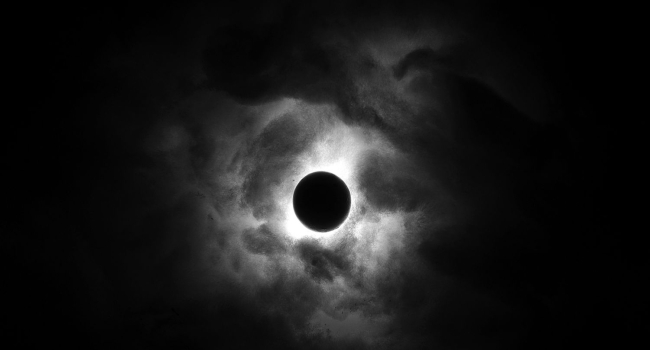
Reports about a so-called “Black Moon,” allegedly expected on the night of August 22, 2025, have spread widely across Russian and international media. According to these claims, a “Black Moon” is a rare event when two new moons occur within a single calendar month. However, the Moscow Planetarium has dismissed this information as distorted and unreliable, urging people to rely on scientific data. This was stated to Gazeta.Ru by the Planetarium’s Scientific Director, Faina Rubleva.
What Is a “Black Moon”?
The term “Black Moon” supposedly refers to the second new moon within one calendar month, when the Moon, facing Earth with its unlit side, becomes invisible in the night sky. However, as Rubleva explained, only one new moon will occur in August 2025 — on August 23.
“Such events are very precisely predictable because they follow the laws of celestial mechanics. One can simply observe them to confirm this firsthand,” she added.
According to her, the term “Black Moon” has no scientific basis and is not used in astronomy. The Moon is neither “black” nor “white” — its visibility depends on its phase and sunlight. During the new moon, Earth’s satellite is indeed invisible because it lies in shadow, but this is an ordinary event that happens every month.
Where Did the Rumors Come From?
Rubleva links the spread of “Black Moon” stories to astronomical illiteracy and the media’s tendency to create sensational headlines. Such terms attract attention but do not reflect reality.
“These fantasies arise from astronomical illiteracy and the desire for sensation. Such information looks unusual and intriguing, which always sparks interest. But one should take the time to open astronomical calendars, where the date, time, and conditions are calculated long in advance. For example, The Astronomical Calendar for School Students for the Current Academic Year,” the Planetarium’s director concluded.
Why Does It Matter?
The spread of false information about celestial events can mislead the public and undermine trust in science. Astronomical calendars, based on precise celestial mechanics, make it possible to predict all lunar phases in advance, including new moons, full moons, and eclipses. In 2025, new moons occur approximately every 29.5 days, and while a second new moon in the same month (a so-called “Black Moon”) is possible, it will not occur in August. The next such event is expected in December 2025 (on December 1 and December 30).
In Brief…
The Moscow Planetarium has debunked the rumors of a “Black Moon” on August 22, 2025, stressing that only one new moon will take place that month — on August 23. The term “Black Moon” is not a scientific concept, and the stories about it are fueled by sensationalism and a lack of astronomical knowledge. Faina Rubleva urges people to consult astronomical calendars and trust the laws of celestial mechanics, which accurately predict the Moon’s motion. This serves as a reminder of the importance of critical thinking about news and reliance on verified scientific sources.