make preferable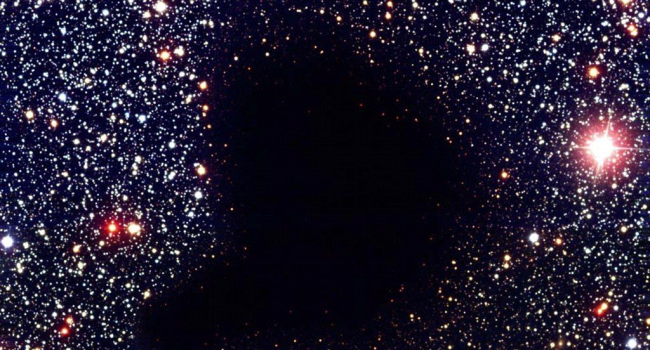
An Australian scientist from the University of Queensland, Dr. Leonardo Gianni, has developed a new mathematical model that, for the first time, incorporates the interaction between expanding voids and collapsing regions of matter in the Universe. The study, published in Physical Review Letters (PRL) on August 15, 2025, offers explanations for key cosmological puzzles—without introducing new physics.
A New Model and DESI Data
Gianni’s model is based on data from the Dark Energy Spectroscopic Instrument (DESI), which collects spectroscopic measurements of objects up to 11 billion light-years away. These data allowed the researcher to analyze the large-scale structure of the Universe, including galaxy clusters, stars, black holes, and vast voids—regions of low matter density.
“The standard cosmological model assumes that particles of matter are uniform and do not interact. But in reality, we see stars, black holes, galaxy clusters, and voids that are constantly interacting, primarily through gravity,” Gianni explained.
His model accounts for the dynamics of these structures, especially the influence of voids and collapsing regions, which were previously ignored or oversimplified in the standard ΛCDM (Lambda-CDM) model. ΛCDM assumes the Universe is composed of roughly 70% dark energy, 25% dark matter, and 5% ordinary matter.
The Role of Cosmic Voids
Cosmic voids are gigantic regions of space with extremely low matter density, sometimes stretching across hundreds of millions of light-years. Unlike the standard model, which assumes matter is evenly distributed, Gianni’s model describes how voids and matter clumps distort cosmological observations.
“We have long known that voids and collapsing regions exist, but we didn’t know how to properly account for their influence. My model gives us a recipe for doing that—without invoking new physics,” Gianni said.
He calculated the minimum sizes of voids and clusters that significantly affect measurements such as galaxy redshift and the parameters of cosmic expansion. Comparing DESI data with other independent catalogs revealed discrepancies with ΛCDM predictions but strong agreement with his model in certain regions—indicating that large voids may be behind observed anomalies.
Solving Cosmological Mysteries
Gianni’s work addresses two major problems in modern cosmology:
- The Hubble Tension
Different methods of measuring the expansion rate of the Universe (the Hubble constant) give inconsistent results. For example, measurements of the cosmic microwave background (CMB) by WMAP and Planck satellites suggest about 68 km/s/Mpc, while observations of nearby galaxies yield about 73 km/s/Mpc. Gianni’s model suggests that voids and clumps of matter distort local measurements, potentially resolving this tension without requiring new physical laws. - Dynamic Dark Energy
Some scientists have proposed that dark energy, the mysterious force driving the accelerated expansion of the Universe, might evolve over time. Gianni argues that the observed “weakening” of dark energy could instead be an illusion caused by the influence of large-scale structures such as voids.
“Our approach can explain both phenomena without introducing extra entities. What appears to be fading energy may simply be the manifestation of the Universe’s structure today,” Gianni stated.
Why This Discovery Matters
Gianni’s model offers a new perspective on the Universe’s evolution by emphasizing the role of its uneven structure. This breakthrough carries several important implications:
- Simplifying Cosmology: Instead of introducing new physical concepts like evolving dark energy, the model explains anomalies using already observed voids and clusters.
- DESI Data Validation: The agreement of his model with DESI observations underscores the precision of modern spectroscopic surveys and their power to reshape cosmological theories.
- Local Inhomogeneity: The research supports the idea that the Milky Way may lie in a region of lower density (a void), which could bias measurements of the Universe’s expansion rate.
In Brief
Dr. Leonardo Gianni’s new mathematical model, based on DESI data, is the first to account for the effects of expanding voids and collapsing matter regions on the evolution of the Universe. It provides possible solutions to the Hubble tension and the hypothesis of dynamic dark energy, explaining them as consequences of the large-scale cosmic structure. Published in Physical Review Letters, the study highlights the significance of voids in cosmology and shows that even without new physics, we can explain many of the Universe’s most puzzling phenomena.