make preferable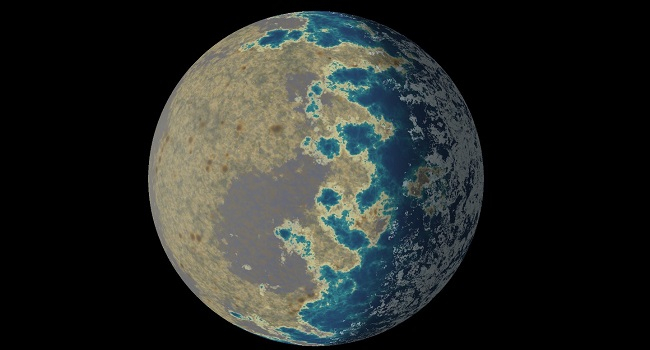
Astronomers have removed the exoplanet TRAPPIST-1 d from the list of potentially habitable Earth-like worlds. New observations from the James Webb Space Telescope have revealed that this planet lacks an atmosphere capable of supporting life. The study, published in The Astrophysical Journal, casts doubt on hopes for extraterrestrial life in the TRAPPIST-1 system. Here’s why the planet has disappointed scientists and what prospects remain for its neighbors.
TRAPPIST-1 d: Hopes That Fell Short
The TRAPPIST-1 system, located 40 light-years from Earth, contains seven rocky planets similar in size to Earth, orbiting a red dwarf star. TRAPPIST-1 d drew particular interest because it sits on the inner edge of the habitable zone — the region where temperatures could allow liquid water to exist. Its Earth-like size and rocky surface once made it one of the top candidates for habitability.
However, data from the James Webb Telescope’s NIRSpec instrument showed a lack of key atmospheric molecules:
- No signs of water, methane, or carbon dioxide — substances essential for forming an atmosphere that can support life.
- Possible atmosphere scenarios: Study lead Carolyn Piau suggested that TRAPPIST-1 d may have either an extremely thin atmosphere like Mars, dense clouds like Venus, or no atmosphere at all.
The likely reason for the lack of atmosphere is the planet’s close proximity to its star, whose radiation could have stripped away its gaseous envelope over billions of years.
Why This Matters
TRAPPIST-1 d was considered one of the most promising exoplanets for the search for alien life. Its exclusion from the list of habitable worlds highlights the challenges in finding planets suitable for life:
- Red dwarfs and habitability: Stars like TRAPPIST-1 (red dwarfs) make up about 70% of all stars in the galaxy. Their habitable zones are located close to the star, making planets vulnerable to intense radiation that can destroy atmospheres.
- The role of the Webb Telescope: NIRSpec’s high sensitivity made it possible to precisely analyze atmospheric composition, something that was previously unattainable. This discovery underscores the importance of new technology in exoplanet research.
Prospects for the TRAPPIST-1 System
Although TRAPPIST-1 d has disappointed scientists, there is still hope for other planets in the system — namely e, f, g, and h. These planets are farther from the star, reducing the impact of its radiation:
- TRAPPIST-1 e, f, g: Located in the habitable zone and potentially able to retain more stable atmospheres. Planet f, for example, is considered one of the most promising due to its optimal temperature.
- TRAPPIST-1 h: The farthest planet, likely too cold for surface liquid water, although subsurface oceans cannot be ruled out.
Scientists continue to monitor the system with the James Webb Telescope to study the atmospheres of these planets. “TRAPPIST-1 d is likely uninhabitable, but we’re just getting started. The other planets in the system may still surprise us,” noted Carolyn Piau.
In Brief…
New James Webb Telescope data show that the exoplanet TRAPPIST-1 d lacks an atmosphere capable of supporting life, removing it from the list of “Earth twins.” The absence of water, methane, and carbon dioxide suggests harsh conditions caused by red dwarf radiation. The study, published in The Astrophysical Journal, highlights the difficulty of finding habitable worlds around such stars. However, there is still hope for other TRAPPIST-1 planets, especially e and f, which may have more favorable environments. Webb’s ongoing observations continue to uncover the secrets of exoplanets, bringing us closer to answering the question of life beyond Earth.