make preferable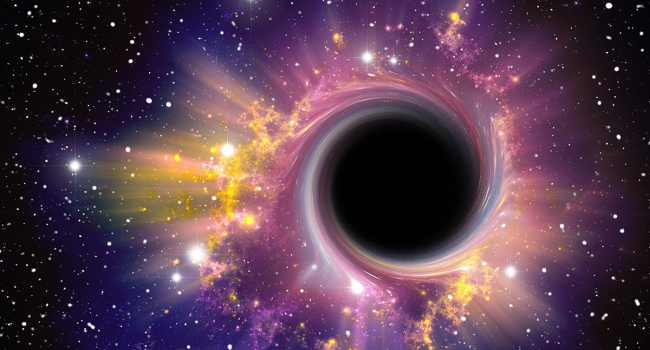
Astrophysicist Jonathan Tan from the University of Virginia has proposed a new model explaining the origin of supermassive black holes — giant objects with masses millions to billions of times greater than the Sun’s, found at the centers of most large galaxies, including the Milky Way. His study, published in Astrophysical Journal Letters, sheds light on the mystery of how these cosmic giants form and is supported by observations from the James Webb Space Telescope.
Pop III.1 Model: The First Stars and Dark Matter
According to Tan’s theory, supermassive black holes originated from the remnants of the first stars in the Universe, known as Population III.1 stars. These early stars reached enormous sizes thanks to the energy released during dark matter annihilation. Their colossal masses allowed them to quickly collapse into black holes, which then became “seeds” for the supermassive black holes at galactic centers.
The Pop III.1 model explains surprising discoveries by the James Webb Space Telescope, which detected supermassive black holes in the very early Universe — at a stage when, according to previous theories, their existence seemed impossible. These findings puzzled scientists because the formation of such massive objects should have required more time than was available in the young Universe.
Bursts and Ionization: A Key to Cosmological Mysteries
Tan suggested that supermassive Population III.1 stars not only gave rise to black holes but also played a crucial role in the early evolution of the Universe. These stars could have rapidly ionized hydrogen by emitting bright bursts of light marking their birth. This pre-ionization phase, occurring before ionization caused by ordinary galaxies, could help explain several cosmological anomalies:
- Hubble Tension: Differences in measurements of the Universe’s expansion rate could be linked to this early ionization phase.
- Dynamic Dark Energy: Tan’s theory supports the idea that dark energy, which drives the Universe’s accelerated expansion, may have behaved differently in the early cosmos.
- Neutrino Mass: Discrepancies in estimates of neutrino mass might also be explained by the influence of these early stars.
Professor Richard Ellis from University College London praised Tan’s work as elegant, noting that the model suggests a two-stage process of star formation and ionization: the first stars produced a bright flash, and subsequent galaxies continued the process — something we can now observe with the Webb telescope.
Significance of the Discovery
The Pop III.1 model not only explains the origin of supermassive black holes but also offers potential solutions to key challenges in modern cosmology. It supports the idea that the first stars, powered by dark matter annihilation, could have been powerful drivers of the Universe’s evolution. Observations from the James Webb Space Telescope, including the detection of the oldest known black holes, strengthen this theory and open new perspectives for understanding the early cosmos.
In Short…
Jonathan Tan’s new model, based on Population III.1 stars, connects the birth of supermassive black holes to the Universe’s first stars fueled by dark matter annihilation. It explains unexpected findings from the James Webb Space Telescope and offers answers to major cosmological puzzles such as the Hubble tension. Tan’s work, published in Astrophysical Journal Letters, marks a new chapter in the study of black hole formation and cosmic evolution, highlighting dark matter’s role in the history of the Universe.